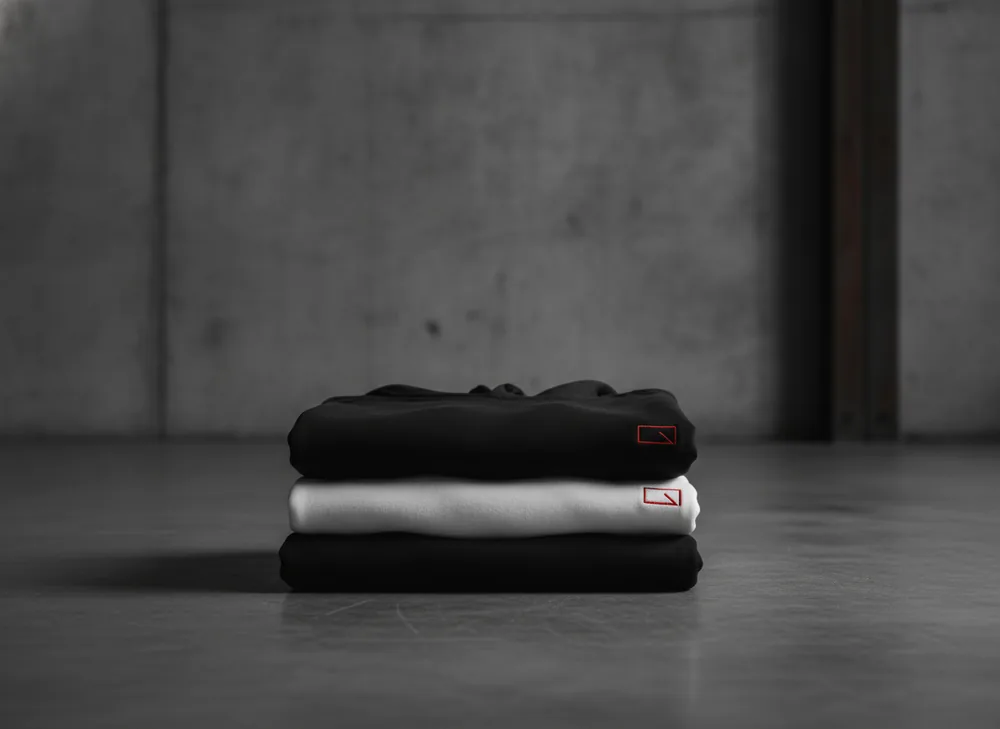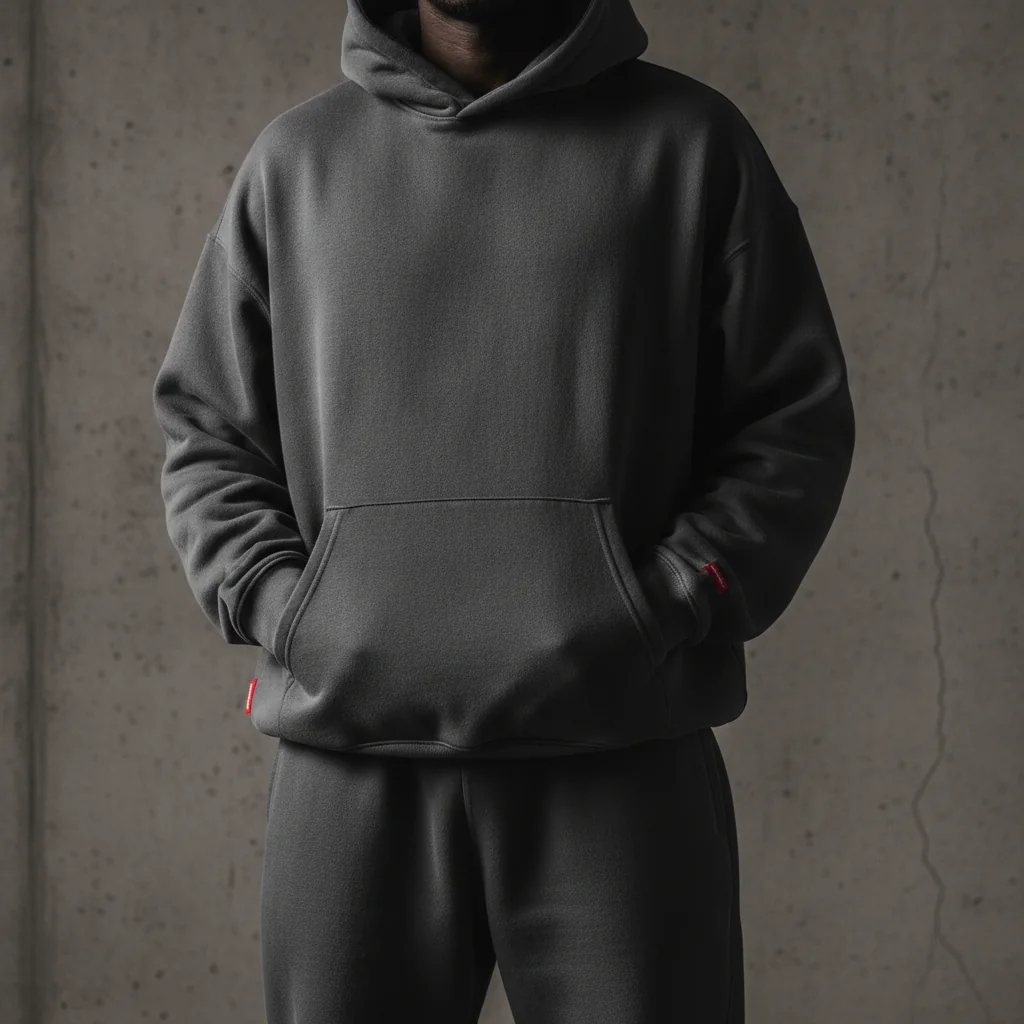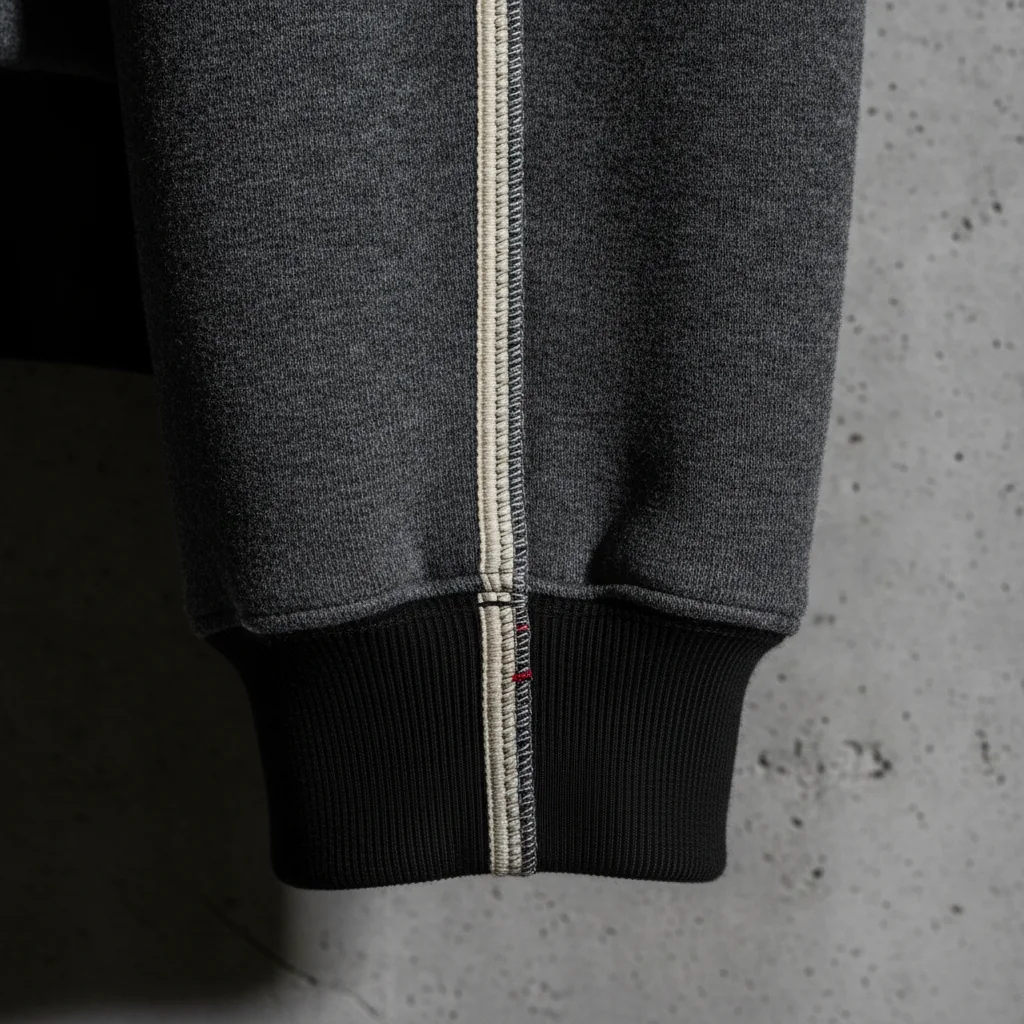
Custom sweatsuits typically take 5 to 7 weeks from a confirmed tech pack to arrival at your door, split roughly between 1-2 weeks for sampling and approval, 3-4 weeks for bulk cutting, sewing, and decoration, and 5-9 days for worldwide DDP shipping. Reorders move faster, often landing in 4-5 weeks total, because the fabric spec and sample are already approved and do not need to be revisited.
Timeline breakdown at a glance
| Stage | Typical duration | What happens |
|---|---|---|
| Tech pack and design confirmation | 2-5 days | Fabric, fit, decoration, and private label details locked |
| Sampling and approval | 7-14 days | Pre-production sample cut, sewn, decorated, and shipped for review |
| Bulk fabric sourcing and cutting | 5-10 days | Approved fabric ordered, marked, and cut at production volume |
| Sewing, assembly, decoration | 10-15 days | Cut-and-sew production plus screen print, embroidery, or wash finishing |
| Quality control and finishing | 2-4 days | Inspection, private label attachment, folding, and packing |
| DDP shipping to your door | 5-9 days | Air freight with duty and customs handled under DDP terms |
Step 1: Design and tech pack development
Each custom sweatsuit order starts with a tech pack – the document specifying GSM, fiber content, fit and silhouette (oversized, boxy, slim), decoration method, and private label details like neck label placement and hang tag design. A brand arriving with a finished tech pack moves straight to sampling within days. A brand without one works with Minku to build one from a rough concept or reference image, which typically adds 2-5 days to the front of the timeline but prevents costly misunderstandings later.
Step 2: Sampling and approval
A pre-production sample is cut, sewn, and decorated to the tech pack specification, then shipped or photographed in detail for the brand’s review. This step typically takes 7-14 days depending on fabric availability and decoration complexity – a simple screen-printed crewneck-and-jogger set samples faster than an embroidered, garment-dyed set requiring a color match on a lab dip. Skipping this step is not an option for a first order: it is the checkpoint that catches fit, fabric, and decoration issues before they become a 200-piece production problem.
Step 3: Fabric sourcing and bulk cutting
Once the sample is approved, fabric is ordered at production volume and verified against the approved GSM and fiber spec before cutting begins. Common sweatsuit fabrics – 280-380 GSM cotton fleece and French terry – are generally available within days from established suppliers, though a less common fiber blend or a specific wash-ready cotton can add a few extra days to sourcing.
Step 4: Sewing, assembly, and decoration
This is the longest single stage, typically 10-15 days for an order in the 50-300 piece range. Crewnecks or hoodies and joggers are cut and sewn in parallel where possible, then decoration – screen print, DTG, embroidery, or wash finishing like acid wash or garment dye – is applied in-house before the pieces move to final assembly and pressing.
Step 5: Quality control and finishing
Each piece is inspected against the approved sample for stitching, print or embroidery placement, and fabric consistency before private labels, hang tags, and packaging are attached. This stage runs 2-4 days depending on order size, and it is where a manufacturer’s quality control process either catches or misses a defective batch before it ships.
Step 6: Shipping and DDP arrival
Finished sweatsuits ship worldwide under DDP (Delivered Duty Paid) terms, meaning duty and customs clearance are handled before the shipment reaches your door – no separate customs bill, no broker to coordinate. Air freight to the USA, UK, and most of Europe runs 5-9 days depending on destination, giving a predictable final leg of the timeline once production is complete.
Factors that speed up or slow down the timeline
Order size affects production time more than most brands expect – a 50-piece run moves faster through cutting and sewing than a 500-piece run, though the sampling stage takes the same time regardless of final quantity. Decoration complexity matters too: a single-color screen print finishes faster than multi-color embroidery or a wash-finish process like acid wash, which requires an extra drying and inspection cycle. Fabric availability is the least predictable factor – a common GSM and fiber blend ships from stock, while an unusual color or specialty blend can add a week to sourcing.
First order vs reorder timelines
A brand’s first custom sweatsuit order carries the full 5-7 week timeline because sampling has not happened yet. A reorder of an already-approved design skips the sampling stage entirely and moves straight to bulk fabric sourcing and production, typically landing in 4-5 weeks door to door. This is one of the practical reasons brands are encouraged to nail the sample on the first attempt – each reorder afterward benefits from that upfront investment in time.
Seasonal and holiday timing considerations
Brands planning a launch around a fixed calendar date – a back-to-school window, an end-of-year holiday drop, a festival season – should count backward from the target date using the full 5-7 week estimate and add a buffer for any fabric or decoration complexity beyond a standard single-color screen print. Ordering fabric during peak seasonal demand at the mill level can occasionally extend the sourcing stage by a few extra days, so a brand targeting a specific date should start the tech pack and sampling process with room to spare rather than working backward from the exact minimum timeline.
A real production example
A brand ordering 150 matching sweatsuit sets – crewneck and jogger, 320 GSM cotton fleece, screen-printed front graphic, embroidered sleeve logo – moved through tech pack confirmation in 3 days, sampling and approval in 11 days, bulk production in 13 days, and DDP shipping to the US in 7 days, landing at 34 days total, close to the 5-week mark. A simpler single-color screen print set without embroidery can move faster; a garment-dyed set with a lab dip color match typically adds several days to sampling.
What happens if a sample needs revisions
Not each first sample is approved on the first round – a fabric weight that reads lighter in hand than expected, a print placement that sits slightly off from the tech pack, or a fit change requested on the waistband are common revision requests. Each revision round typically adds 5-10 days to the sampling stage, since a second sample needs to be cut, sewn, decorated, and shipped again for review. Brands that provide clear, specific feedback on the first sample – exact measurements, reference photos, a marked-up sample – tend to reach approval faster than brands giving general feedback like “make it feel heavier,” which leaves more room for interpretation on the second attempt. A brand ordering its first custom line should budget for at least one revision round as a normal part of the process rather than an unexpected setback, since even an experienced factory cannot always predict exactly how a fabric or fit reference will translate until it is physically produced and held in hand.
Communication and response time as a hidden timeline factor
The stated timeline assumes a brand responds to sample photos, proofs, and questions within a day or two at each checkpoint. A brand that takes a week to review sample photos or confirm a color choice adds that same week directly onto the total timeline, since production cannot proceed past an approval gate without sign-off. Brands working toward a fixed launch date should treat their own response time as part of the schedule they are managing, not only the factory’s own production speed. Nominating one person on the brand side to review and approve each checkpoint, rather than routing decisions through several people, is a small change that noticeably tightens this part of the timeline.
Planning your launch calendar around this timeline
Working backward from a target launch date, a brand should reserve the full 5-7 weeks for a first order, plus a short buffer of 5-7 days for any sample revision or shipping delay outside anyone’s direct control, such as a customs inspection or a carrier delay during a peak shipping period. For a reorder on an approved design, a 4-5 week window plus a smaller buffer is a reasonable planning assumption. Building this buffer into a launch calendar – rather than planning to the exact minimum – is the difference between a comfortable production schedule and a rushed one if any single stage runs a few days long.
How Minku Apparel manages sweatsuit production timelines
We run tech pack review, sampling, bulk production, and DDP shipping as one coordinated process rather than separate vendor handoffs, which keeps the 5-7 week timeline predictable rather than aspirational. Each order gets a production schedule at the tech pack stage, so a brand knows the expected sampling and shipping dates before committing to bulk. See custom sweatsuit manufacturer for our full sweatsuit range, or how long does clothing sampling take for more detail on the sampling stage specifically. Ready to get a timeline for your own design? Get Your Custom Quote.
How Long Does It Take to Manufacture Custom Sweatsuits? — In Detail