DTG (direct-to-garment) prints ink onto the surface of a finished cotton garment, while sublimation infuses dye into polyester fiber before or during cutting. DTG wins for cotton streetwear with photographic or full-color graphics; sublimation wins for all-over polyester prints on performance or technical pieces. The two methods are not interchangeable, and choosing wrong is the single most common reason a print run disappoints on arrival.
This page compares both methods on fabric compatibility, print durability, cost, and where each fits a streetwear line, so you order the right decoration the first time. If you already know which fits your design, get your custom quote and we will confirm.
What DTG Printing Is
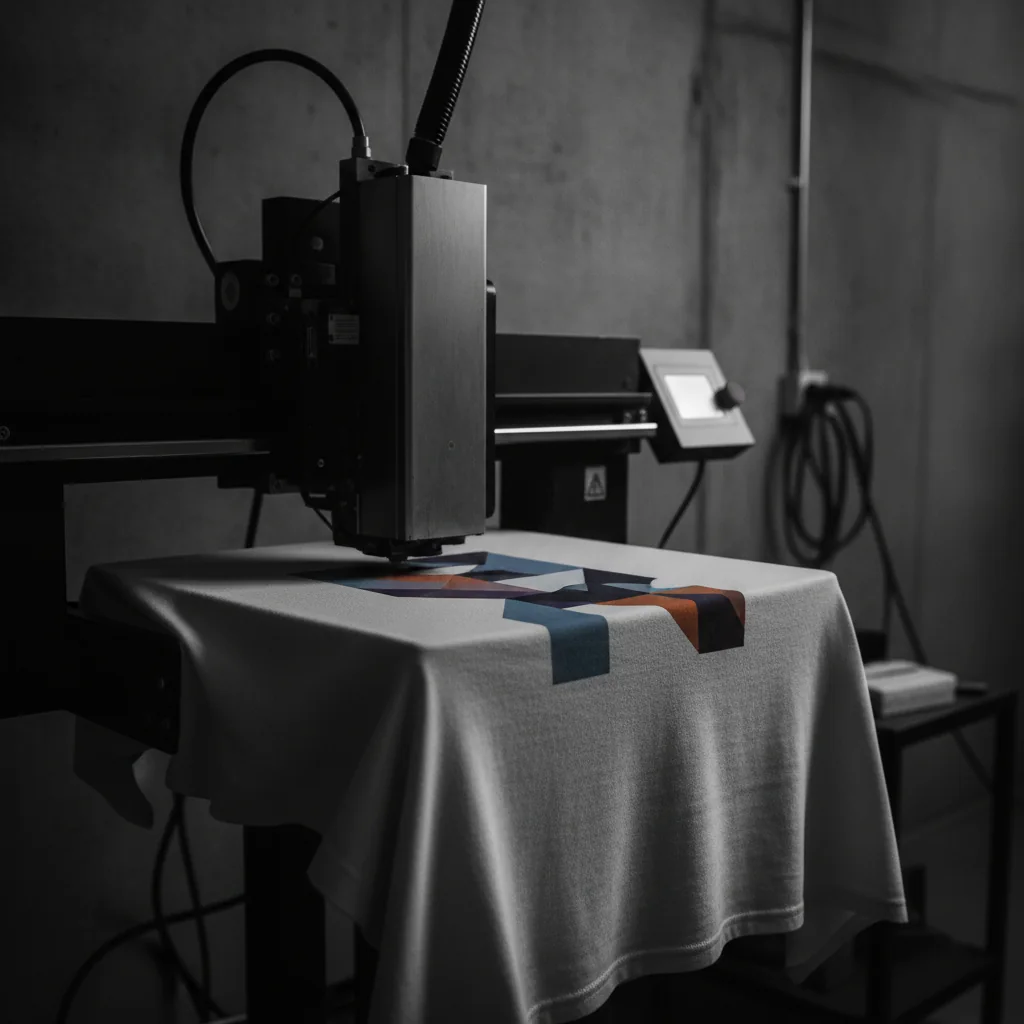
DTG uses inkjet technology to print directly onto a garment’s surface, laying down water-based ink that cures into the top layer of the fabric. It works because the ink bonds to natural fibers – cotton, primarily – which absorb and hold the pigment. See our full DTG printing manufacturing page for the process breakdown.
Because DTG prints file-based artwork with no screen setup, it handles gradients, photographic detail, and multi-color designs without added cost per color – a strength screen printing does not share.
What Sublimation Printing Is
Sublimation turns solid dye into gas under heat and pressure, which then bonds permanently into polyester fiber at a molecular level rather than sitting on top of the fabric. Because the dye becomes part of the fiber, sublimation prints do not crack, peel, or fade from surface wear the way a topical print can.
Sublimation only works on polyester or poly-blend fabric with a high synthetic content – it does not bond to cotton, which is why the two methods rarely compete for the same garment. Sublimation is applied to fabric either before cutting (all-over print) or onto finished polyester panels.
DTG
Prints onto finished cotton garments. Best for photographic graphics, gradients, and small-run multi-color designs. Print sits on the fabric surface.
Sublimation
Dye becomes part of polyester fiber. Best for all-over prints and technical or performance pieces. No hand-feel change, unlimited color range.
Fabric Compatibility: The Real Deciding Factor
Fabric choice decides this comparison before design even enters the conversation. Streetwear’s core fabrics – heavyweight cotton, French terry, fleece – are DTG’s home ground and are largely unsuitable for sublimation, since the process needs polyester to bond. Performance wear, all-over print pieces, and poly-blend tracksuits sit in sublimation’s lane instead.
| Factor | DTG | Sublimation |
|---|---|---|
| Fabric | Cotton, cotton-poly blends | Polyester, poly-blends 65%+ |
| Coverage | Placement prints (chest, back) | All-over, edge-to-edge possible |
| Color range | Full color, photographic | Full color, photographic |
| Hand-feel | Slight surface texture | None – dye is in the fiber |
| Durability | Strong with correct curing | Will not crack or peel |
| MOQ | From 50 pcs | From 50 pcs |
Print Durability and Wash Performance
A correctly cured DTG print on 100% cotton holds through normal wash cycles for the life of the garment, provided the ink was cured to spec and the garment is washed inside out on a standard cycle. Its failure mode, when it happens, is surface cracking from under-curing or repeated harsh drying.
Sublimation has no comparable failure mode on compatible fabric, because the dye lives inside the fiber rather than on top of it – there is nothing on the surface to crack, peel, or fade unevenly. This is why sublimation is the standard choice for all-over graphics that need to survive years of washing without visible wear at the print edges.
Cost and Minimum Order Quantity
Both methods share a 50-piece MOQ per design at Minku. DTG cost is driven mainly by print area and garment fabric weight, with color count adding little to nothing since the process is digital. Sublimation cost is driven by the amount of surface covered – an all-over print costs more than a chest placement because the entire fabric panel is dyed before assembly.
Neither method is the lower-cost route by default; the fabric your design needs decides which one applies, and pricing follows from there rather than the other way around.
Where Each Method Shows Up in Streetwear
DTG dominates cotton tee and hoodie graphics – band-style artwork, photographic imagery, gradient designs, and small-batch drops where screen setup cost would not be earned back by run size. It is the default for a graphic-heavy streetwear tee on a heavyweight cotton base.
Sublimation shows up on all-over print hoodies and tees, technical tracksuits, and mesh shorts where the graphic wraps the entire garment edge to edge with no visible seams or fabric gaps. See our all-over print manufacturing page for how full-panel sublimation integrates with cut and sew construction.
Where DTG and Sublimation Came From
DTG grew out of standard inkjet printing technology adapted with specialty inks and pretreatment chemistry that lets pigment bond to fabric fiber instead of paper, becoming commercially practical for apparel in the early 2000s. It replaced screen printing for short runs and photographic detail that would otherwise need a costly number of screens.
Sublimation dates back further, developed originally for hard-surface printing – mugs, signage, plastics – before textile chemists adapted disperse dyes and heat presses for synthetic fabric in sportswear and technical apparel. Streetwear adopted it later, once all-over print graphics became a signature look for hype-driven drops.
A Real Example
A US brand sent us two designs for the same drop: a photographic band-poster graphic for a cotton tee, and a camo-style all-over pattern for a tracksuit. We ran the tee on 220 GSM combed cotton with DTG, since the graphic had gradients that would need eight-plus screens to reproduce accurately with screen print. The tracksuit ran on a polyester-blend fleece with sublimation, since the camo pattern needed to wrap the sleeves, hood, and body with no visible break at the seams. Both pieces shipped in the same order under one production timeline.
Choosing Between Them: A Decision Checklist
Ask three questions before ordering. First, what is the fabric – cotton points to DTG or screen print, polyester or poly-blend points to sublimation. Second, where does the graphic sit – a chest or back placement works for either method on the right fabric, but full edge-to-edge coverage across seams needs sublimation on cut panels. Third, how many colors and how much gradient detail – heavy photographic detail favors DTG’s digital process over screen print’s per-color setup, regardless of which fabric family you land on.
If your fabric and coverage answers point in different directions – cotton fabric with an all-over design, for instance – the fabric usually has to change to match the print method, since sublimation cannot bond to cotton no matter how the artwork is prepared.
Can You Combine Both on One Garment?
Yes, in a limited way. A sublimated all-over print panel can be cut and sewn into a garment that also carries a DTG or screen-printed graphic added afterward on a cotton-blend trim panel, though this is a specialized build rather than a standard run. Most brands keep the two methods on separate SKUs rather than combining them, since the fabric requirements pull in different directions.
Common Mistakes Brands Make
The most frequent mistake is requesting sublimation on a 100% cotton garment, which is not physically possible – the dye has nothing to bond to without polyester content, and the order has to be corrected before production starts. The second is choosing DTG for an all-over graphic that needs full edge-to-edge coverage, which DTG cannot achieve on a finished garment the way sublimation can on cut panels.
A quick check before ordering: if the fabric is cotton and the print sits in one placement, DTG is correct. If the fabric is polyester-based and the print wraps the whole garment, sublimation is correct. If you are unsure which your design needs, send the artwork and intended fabric and we will confirm before quoting.
Care and Longevity Notes
DTG garments should be washed inside out on a standard cycle and air-dried or tumble-dried on low heat; high heat is the main cause of premature surface cracking on any topical print, DTG included. Sublimated garments have no print layer to protect, so care instructions follow the base polyester fabric rather than the graphic, which is one more reason all-over sublimated pieces read as low-maintenance over years of wear compared with heavily placement-printed cotton garments.
How Minku Runs Both Methods In-House
Our Pakistan factory runs DTG and sublimation printing in-house alongside screen print, embroidery, and all-over print, so a mixed order combining a DTG tee and a sublimated all-over hoodie ships from one production run rather than two separate suppliers. We confirm fabric compatibility with your artwork before any print runs, avoiding the wasted sample rounds a mismatched fabric-and-method pairing causes.
Send your artwork and target fabric and we will tell you honestly which method fits, then get your custom quote to lock pricing and MOQ. For the full range of decoration and build options across our product line, see the custom clothing manufacturing hub.
DTG vs Sublimation Printing Explained — In Detail