Minku Apparel manufactures custom jackets for German streetwear brands from 50 pieces per design, building bomber, puffer, work-jacket, and denim styles to your tech pack with your labels sewn in before a single bulk yard is cut. German labels source jacket production through Minku’s Pakistan factory because it delivers sampled, private-labeled outerwear on a DDP door in 6 to 9 days with EU import VAT already covered, at a per-unit cost that a domestic German cut-and-sew atelier at low volume cannot reach. Each order is sampled and approved first, so a Berlin or Munich label ships its jacket line in the exact fit, weight, and finish it signed off on.
Why German Brands Manufacture Jackets Overseas
Germany runs one of Europe’s largest and most design-literate streetwear markets, spanning Berlin’s techno-and-archive scene through to a national base of independent labels selling online and through concept stores nationwide. What most of those labels lack is a domestic factory relationship that can run outerwear at a workable minimum – German ateliers are built for premium, low-volume tailoring or for large-run contract manufacturing, with little sitting in between for a 50 to 200-piece jacket capsule. Minku’s factory in Pakistan fills that gap: shell sourcing, lining, embroidery, screen print, garment dye, and private-label finishing under one roof, at a 50-piece MOQ per design. A German founder building a jacket range gets one factory relationship and one tech pack process instead of juggling a cut-and-sew house, a decoration studio, and a private-label supplier separately. See Minku’s full custom jacket manufacturing capabilities or browse the broader Germany streetwear manufacturing hub for hoodies, tees, and sweatsuits sourced from the same factory.
Fabric and Construction for German Winters
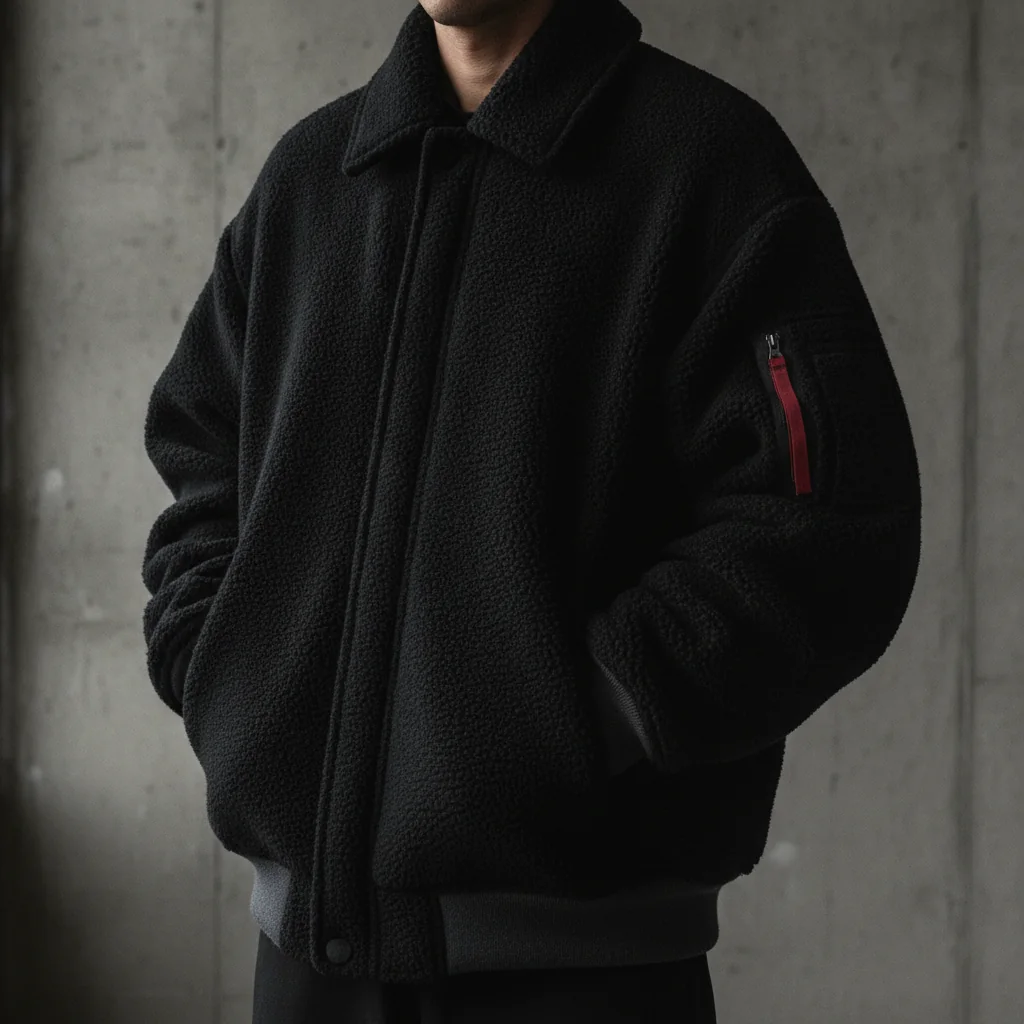
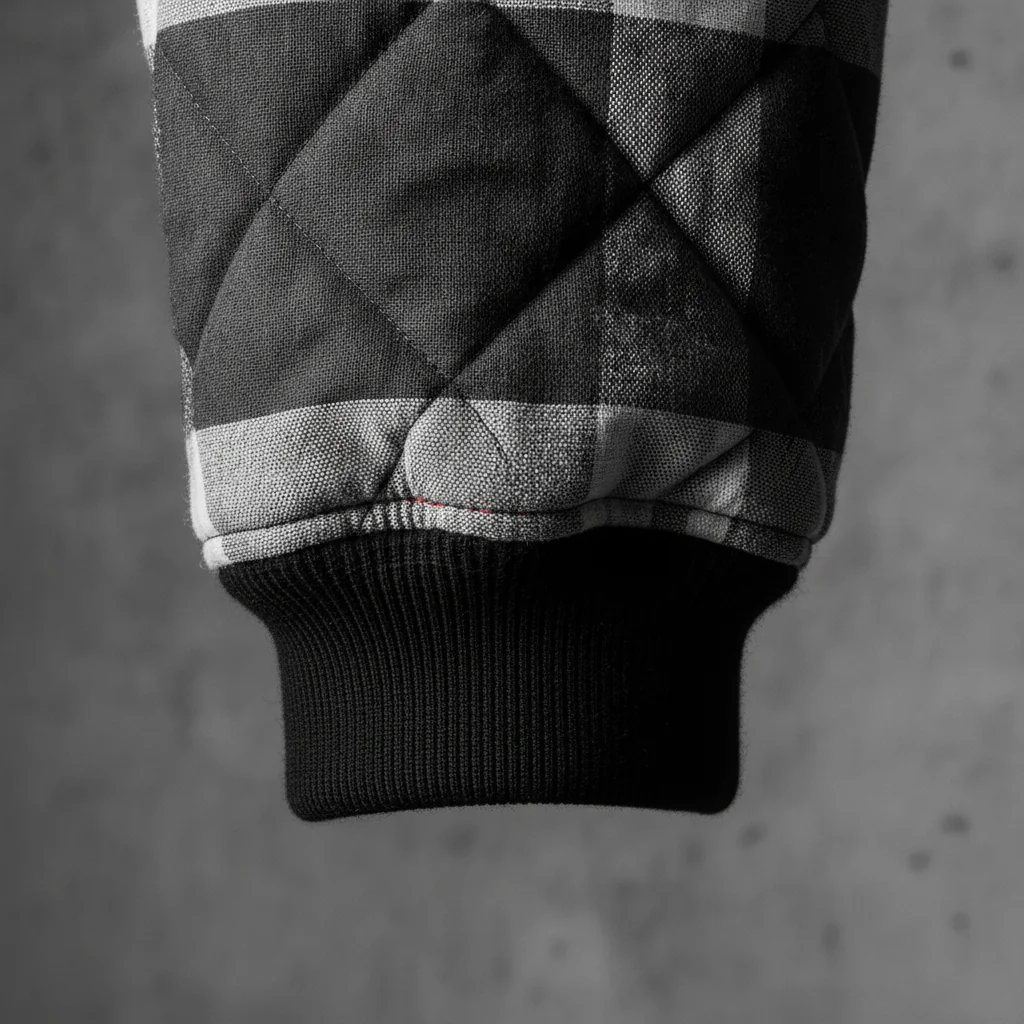
Germany’s climate runs cold and wet across most of the country for five to six months of the year, with Munich’s alpine-adjacent winters running colder still, so outerwear is not a seasonal accessory here – it is core inventory. Minku builds insulated poly-fill and down-alternative puffer jackets, brushed-fleece-lined bomber jackets, and heavyweight cotton-canvas work jackets for the cold months, alongside lighter nylon coach jackets for the shorter warm season. Shell fabrics run from water-resistant nylon to heavyweight cotton canvas and twill; linings run from quilted poly-fill to brushed fleece to quilted taffeta for a cleaner drape. Each fabric and lining combination is confirmed on a pre-production sample and checked against German buyers’ expectations for weight and hand-feel before bulk cutting begins.
Jacket Styles We Manufacture
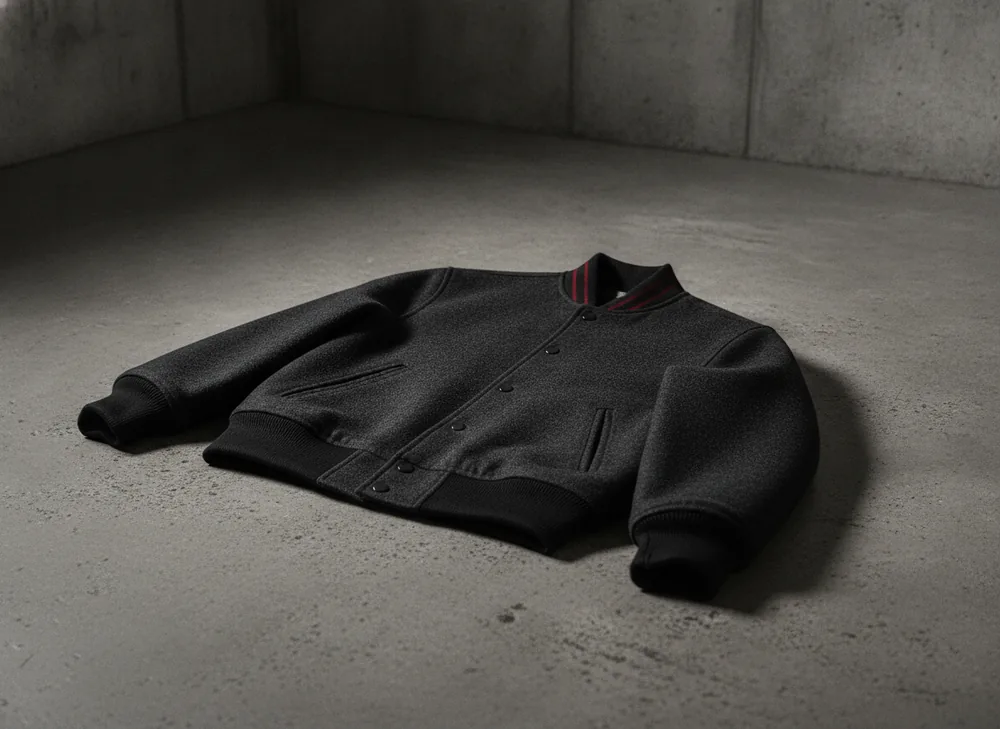
Minku’s range covers the styles that move fastest with German streetwear and merch labels: bomber jackets with ribbed cuffs and hem for a Berlin-style layered look, work jackets in heavyweight canvas for the workwear-influenced side of German street style, puffer jackets for winter-core drops, denim jackets with garment-dye and acid-wash finishing, varsity jackets for collaboration and event pieces, and windbreakers for shoulder-season layering. Each style ships from the same 50-piece MOQ so a German label can test a work-jacket capsule alongside a larger bomber reorder.
Decoration and Private-Label Branding
German streetwear buyers read logo placement and label detail closely, so decoration and private label are treated as core design elements rather than an afterthought. Minku runs flat and puff embroidery for chest logos and back hits, screen print for nylon and lightweight shells, and garment dye or acid wash for denim and canvas jackets that need a worn-in finish. Private label covers custom woven neck labels, main labels, embroidered patches, drawcord tips, zipper-pull branding, and hangtags or polybags matched to your packaging spec – all priced into the per-unit cost from the first sample rather than quoted as an add-on later.
Sampling and Production Process for a German Order
A German jacket order starts with a tech pack detailing measurements, construction notes, fabric and trim choices, and decoration placement. Minku’s team confirms the pack, sources shell and lining fabric, and builds a pre-production sample within one to two weeks. You review fit, fabric weight, and decoration placement on that sample before bulk cutting – if a change is needed, a second sample round is built rather than shipping a bulk order that misses spec. Once approved, bulk production runs 3 to 5 weeks depending on order size and style count, followed by quality control, private-label packing, and consolidation for the DDP shipment to Germany.
DDP Shipping and EU VAT to Germany
Each Minku order to Germany ships Delivered Duty Paid, meaning EU import VAT and customs clearance are handled before the shipment reaches your address, so the landed cost quoted at order time is the cost paid on arrival – no surprise VAT bill, no customs broker call, no shipment held at a German border facility. Air freight transit runs 6 to 9 days door to door once bulk production clears quality control.
| Shipping Factor | Detail for Germany |
|---|---|
| Transit time | 6 to 9 days, air, door to door |
| Duty and VAT | Covered under DDP – fixed landed cost |
| Currency | EUR invoicing |
| Arrival point | Your German warehouse or fulfillment partner |
Order Sizing, Reorders, and Scaling Across German Cities
Most German labels start a jacket line at the 50-piece minimum on a single style tied to a specific drop, then use sell-through to decide what to reorder. Because MOQ is set per design, a founder can run a work-jacket capsule for a Berlin release alongside a puffer capsule aimed at Munich’s colder retail season, without committing to a single large run before either has proven out. Reorders move faster than a first order since the tech pack and sample are already on file; a repeat bomber or puffer order can often skip straight to a confirmation sample. This step-up path – test at 50, reorder at 150 to 300, then build a full seasonal outerwear range – is how most independent German labels scale a jacket line without tying up cash in unproven inventory.
Quality Control on a German Jacket Order
Outerwear carries more hardware and structural stress than a tee or hoodie – zippers, snaps, lining seams, and drawcord grommets all take load that a printed graphic never does. Minku checks stitch density on load-bearing seams, zipper and snap function, lining attachment, and colorfastness on garment-dyed or acid-washed pieces before packing, with spot checks across the full production run rather than a single reference sample. Any jacket failing a fit, stitch, or hardware check is pulled before it reaches your shipment, which matters more to German buyers than most markets – reviews on construction quality travel fast in a market known for holding brands to a high build standard.
Common Mistakes German Brands Make Sourcing Jackets Overseas
The most costly mistake a German label makes on a first overseas jacket order is skipping the pre-production sample to save a week or two of lead time – a shell fabric that reads correctly in a swatch photo can drape or crease differently once cut into a full bomber or work-jacket pattern. The second mistake is treating hardware as an afterthought: zipper weight, snap grade, and drawcord hardware need to be specified in the tech pack, not left to the factory’s default stock, or a German buyer used to precise construction will notice the difference on unboxing. A third mistake is underestimating lining requirements for the German climate – a shell that looks right on a lookbook photo but carries a thin mesh lining will underperform against buyer expectations once the weather turns in October. Minku’s sampling process is built to catch each of these before bulk cutting, but the label still needs to specify hardware grade and lining weight clearly in the initial tech pack to get the fastest possible sample turnaround.
The German Streetwear Market
Germany’s streetwear identity splits along regional lines: Berlin’s techno-and-archive-driven underground scene favors utilitarian silhouettes, muted colorways, and workwear detailing, while Munich and the south lean toward a cleaner, premium-adjacent aesthetic shaped by the region’s fashion retail base. Nationally, German buyers respond to construction quality and material honesty over flash branding – fabric weight, stitch quality, and label detail matter as much as the graphic on the front. Jackets in particular carry weight in this market because outerwear is worn for most of the year, making it one of the highest-visibility pieces a German label can put into a drop.
Minku vs a Domestic German Cut-and-Sew Atelier
Domestic German Atelier
- Higher minimums outside premium tailoring runs
- Limited in-house embroidery and print capacity
- Narrower shell and lining fabric range at low volume
- Local turnaround but higher per-unit cost
Minku Apparel (Pakistan)
- 50-piece MOQ per jacket design
- In-house embroidery, print, garment dye, private label
- Nylon, canvas, poly-fill, and fleece in one factory
- DDP door-to-door in 6 to 9 days, fixed landed cost
Whether you are adding a first work jacket to an existing German tee-and-hoodie line or launching an outerwear-first label, Minku’s process starts the same way: a tech pack review, a sample, and a fixed quote. Related product lines like custom hoodies for German brands and custom t-shirts for German brands ship from the same factory under the same DDP terms, so a full seasonal drop can be produced and shipped together.
Custom Jacket Manufacturer in Germany – Jackets for Your Brand | Minku Apparel — In Detail