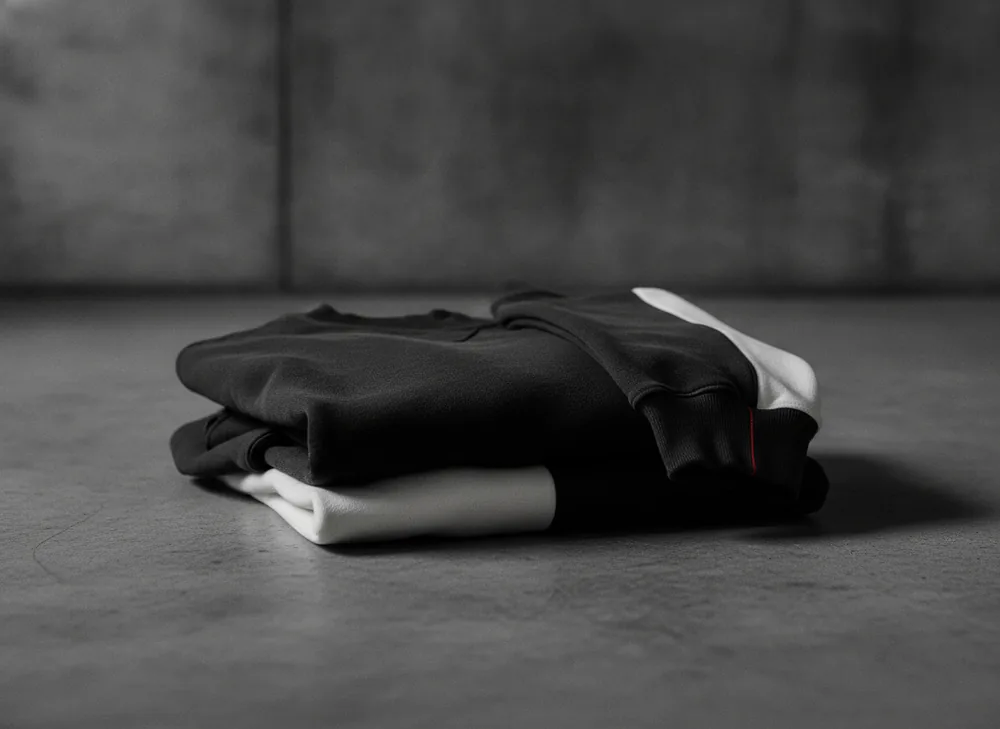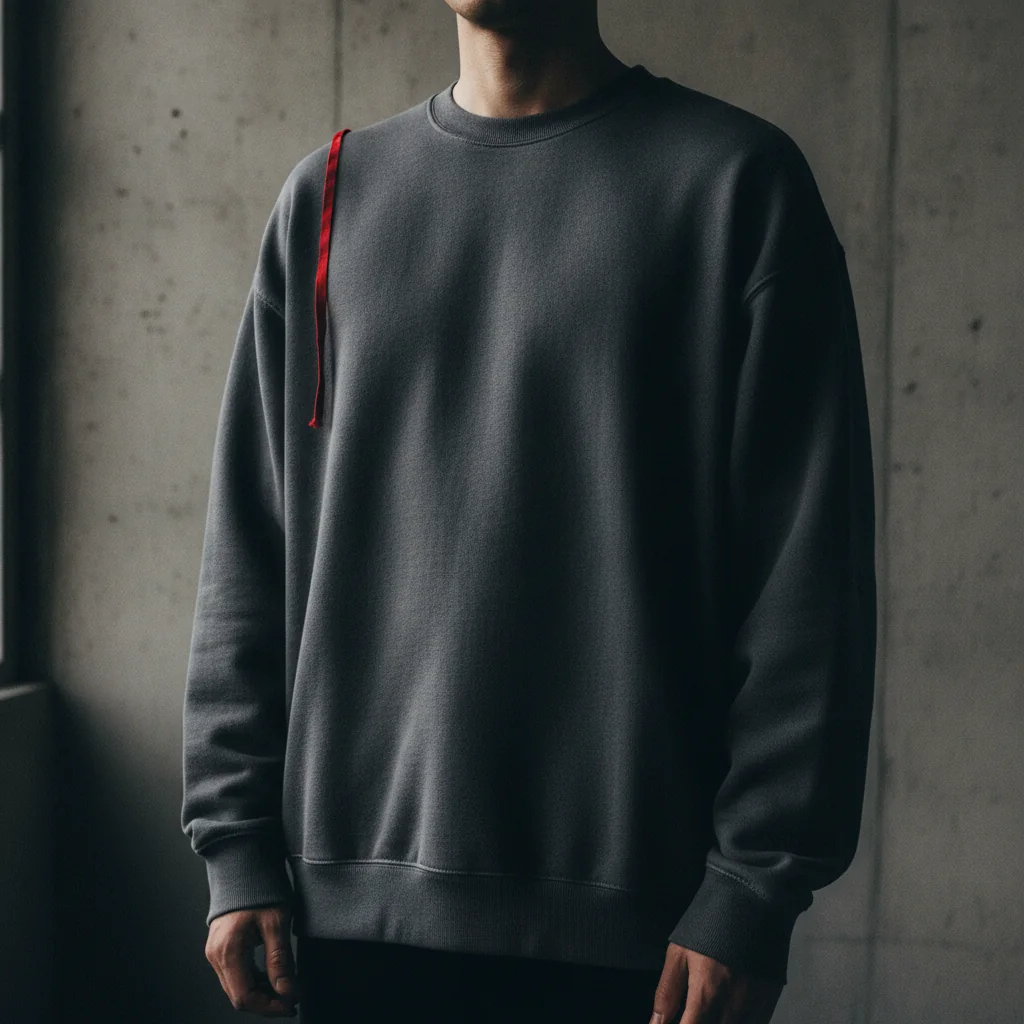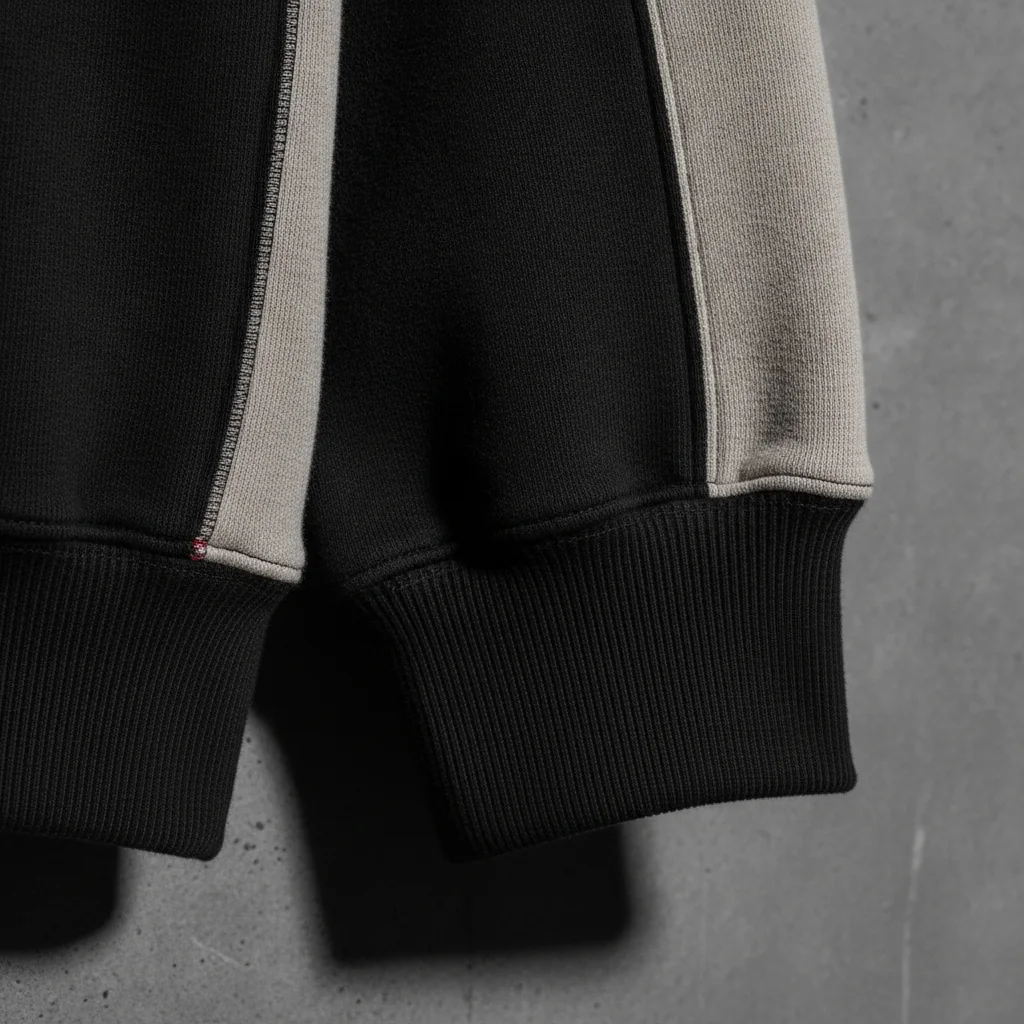
Minku Apparel manufactures custom crewneck sweatshirts for streetwear brands from 50 pieces per design – a round-neck, ribbed-hem construction cut in 280 to 400+ GSM cotton fleece or French terry, sampled and approved before bulk, and finished with a brand’s own private label. We ship worldwide DDP door to door from our Pakistan factory to labels across the USA, UK and Europe.
The crewneck sweatshirt is the most versatile silhouette in a streetwear line – simpler to construct than a hoodie, faster and less costly to decorate at scale, and adaptable across a boxy, regular or cropped fit without losing its core identity. This page covers what defines a well-built crewneck, the fabric and construction choices that separate a premium build from a basic blank, and how Minku manufactures the style to a brand’s exact spec.
What Defines a Premium Crewneck Sweatshirt
A crewneck sweatshirt is built around three construction points: a ribbed crew collar that holds its shape without stretching out after repeat washes, a ribbed hem and cuff dense enough to keep the garment’s silhouette rather than flaring, and a body fabric weight substantial enough to drape rather than cling. Get any one of the three wrong and the garment reads as a t-shirt with a heavier fabric swap rather than a purpose-built sweatshirt.
The collar rib is the detail most often under-specified. A low-density rib collar loosens within a handful of wears, which is why we spec a higher-retention rib blend and reinforce the shoulder seam with taping on heavier constructions, keeping the neckline’s shape through a full production run’s worth of wear-testing and beyond.
Fabric and Construction Options
Crewneck sweatshirts run in three core fabrics: mid-weight cotton fleece (240 to 300 GSM) for a lighter, everyday layer; heavyweight brushed fleece (320 to 400+ GSM) for a substantial, structured drop; and French terry for a smoother face with a looped interior, favored by brands wanting a cleaner surface for large-scale graphic prints. All three are cut-and-sew from a brand’s spec rather than dyed and pressed onto a blank.
Construction options extend to raglan versus set-in sleeves, side-seam versus tubular knit bodies, and drop-shoulder versus regular shoulder placement – each affecting how a graphic sits across the chest and how the garment drapes once weight is added through fleece or French terry.
Fit Options: Boxy, Regular and Cropped
A regular-fit crewneck follows a straight body line with a standard shoulder seam, suited to brands wanting a wearable, everyday staple. A boxy fit widens the body and often drops the shoulder slightly, giving the garment a squarer silhouette that reads as more of a design statement. A cropped crewneck shortens body length while keeping sleeve proportion intact, a fit that has grown in demand across unisex and women’s-lean streetwear lines.
We grade each fit from the brand’s chosen block rather than resizing a single standard pattern, so a boxy and a regular version of the same design hold consistent proportion relationships across the size run.
Decoration Methods That Suit a Crewneck
Screen print remains the workhorse decoration for crewnecks, handling bold single or multi-color chest and back graphics at volume with sharp edge definition on a fleece surface. Puff embroidery adds a raised, textured logo treatment that reads as a step up in perceived value, particularly on the chest or sleeve. DTG suits smaller-run, photorealistic or multi-colorway graphics where screen printing’s setup cost does not make sense at volume.
Garment dye and acid wash are also available for brands building a distressed or vintage-leaning crewneck line, applied after construction so the ribbed collar and hem take on the same worn character as the body fabric.
MOQ and Pricing
Crewneck sweatshirt orders start at 50 pieces per design, with per-unit cost driven by fabric weight, decoration method and quantity. A 50-piece run in 280 GSM fleece with a single screen print location prices below a 300-piece run in 400 GSM fleece with puff embroidery and an all-over print liner – expect a quoted range once we review your tech pack rather than a flat rate.
Reorders typically land a better per-unit price than a first run, since pattern grading, screens and any embroidery tooling are already built.
Payment on a first order typically splits into a deposit at tech-pack approval and a balance due once the pre-production sample is signed off and bulk cutting is scheduled, giving both sides a clear checkpoint before the largest share of capital is committed to fabric and labor.
How Minku Manufactures Your Crewneck
Every order starts with a tech pack review confirming fit block, fabric weight, rib density and decoration placement. We produce a single pre-production sample for approval before cutting bulk, so any adjustment to collar rib, body length or print registration happens on one unit rather than across an entire production run. Once approved, bulk cutting, sewing and decoration run in-house, followed by private-label finishing – your woven neck label, printed care label and hangtag – and quality inspection before the order ships DDP to your door.
Turnaround from approved sample to shipped bulk order typically runs three to five weeks depending on quantity and decoration complexity.
Crewneck vs Hoodie: Which to Launch First
Crewneck Sweatshirt
Lower construction cost, faster production, cleaner surface for large graphics, better margin at volume.
Hoodie
Higher perceived value, drawstring and hood detailing, typically the higher-price hero piece in a drop.
Many brands launch a crewneck alongside a hero hoodie in the same drop rather than choosing one over the other – the crewneck often carries the bolder chest graphic at a lower price point, giving customers an entry item alongside the hoodie’s premium anchor.
Real Examples From Production
A menswear-adjacent streetwear label ran a 200-piece crewneck order in 320 GSM fleece with a puff-embroidered chest logo and matching back print, approved the sample on the first round, and reordered at 400 pieces six weeks later once the design sold through. A separate label building a vintage-leaning capsule specced a garment-dyed 280 GSM crewneck with a distressed screen print, using the dye process to unify a five-color print into a single worn tone across the finished garment.
Why Brands Choose Minku for Crewnecks
A crewneck sweatshirt looks straightforward on paper, but collar retention, hem density and consistent fit grading are where budget blank suppliers cut corners. Minku builds every crewneck cut-and-sew from a tech pack, samples before bulk, and finishes with full private label – the standard a brand needs once a crewneck design becomes a repeat seller rather than a one-off drop.
Ready to spec your crewneck? Get your custom quote or see our full custom sweatshirt manufacturer overview for fabric and decoration options across the whole sweatshirt line.
Quality Control Before Shipping
Every crewneck order passes through inline checks during cutting and sewing, then a final pre-shipment inspection covering seam strength, print or embroidery registration, colorfastness and rib retention on a sample percentage of the finished run. Measurements are checked against the approved sample’s spec sheet on a randomized selection basis rather than only a visual pass, catching a drifted hem or a mis-registered print before the order leaves the factory.
Any unit failing inspection is pulled and replaced ahead of shipping rather than counted toward the delivered quantity, which is why the piece count a brand receives matches the piece count ordered.
Sizing Consistency Across Reorders
A crewneck’s pattern, grading rules and fabric shrinkage allowance are locked and archived after sample approval, so a second or third production run cuts from the identical spec rather than a re-interpreted version of the original. This matters more for a crewneck than for a t-shirt, since fleece and French terry shrink differently between fabric lots if shrinkage allowance is not accounted for consistently at the cutting stage.
We retain the approved tech pack, pattern and fabric shrinkage data on file for every design, so a brand reordering six or twelve months later gets a garment that measures the same as the first production run, not a close approximation of it.
Comparing Crewneck Constructions Side by Side
| Construction | Weight | Best For |
|---|---|---|
| Mid-weight cotton fleece | 240-300 GSM | Everyday layer, three-season wear |
| Heavyweight brushed fleece | 320-400+ GSM | Structured hero drop, cold-climate markets |
| French terry | 260-340 GSM | Smooth surface for large-scale graphic prints |
Choosing between these three usually comes down to the drop’s climate and price positioning: a brand launching a warm-weather region tends toward French terry or mid-weight fleece, while a brand building a cold-climate hero piece leans into the heavier brushed constructions.
Related Sweatshirt Builds
Brands often pair a crewneck with a heavier companion piece or a variant built for a specific use case. Our heavyweight sweatshirt manufacturer page covers the 400+ GSM end of the fabric range, our embroidered sweatshirt manufacturer page details puff and flat embroidery placement, and our oversized sweatshirt manufacturer page covers the dropped-shoulder, boxy-body cut for brands wanting a more exaggerated silhouette than the standard crewneck fit described above.
Custom Crewneck Sweatshirt Manufacturer | Minku Apparel — In Detail