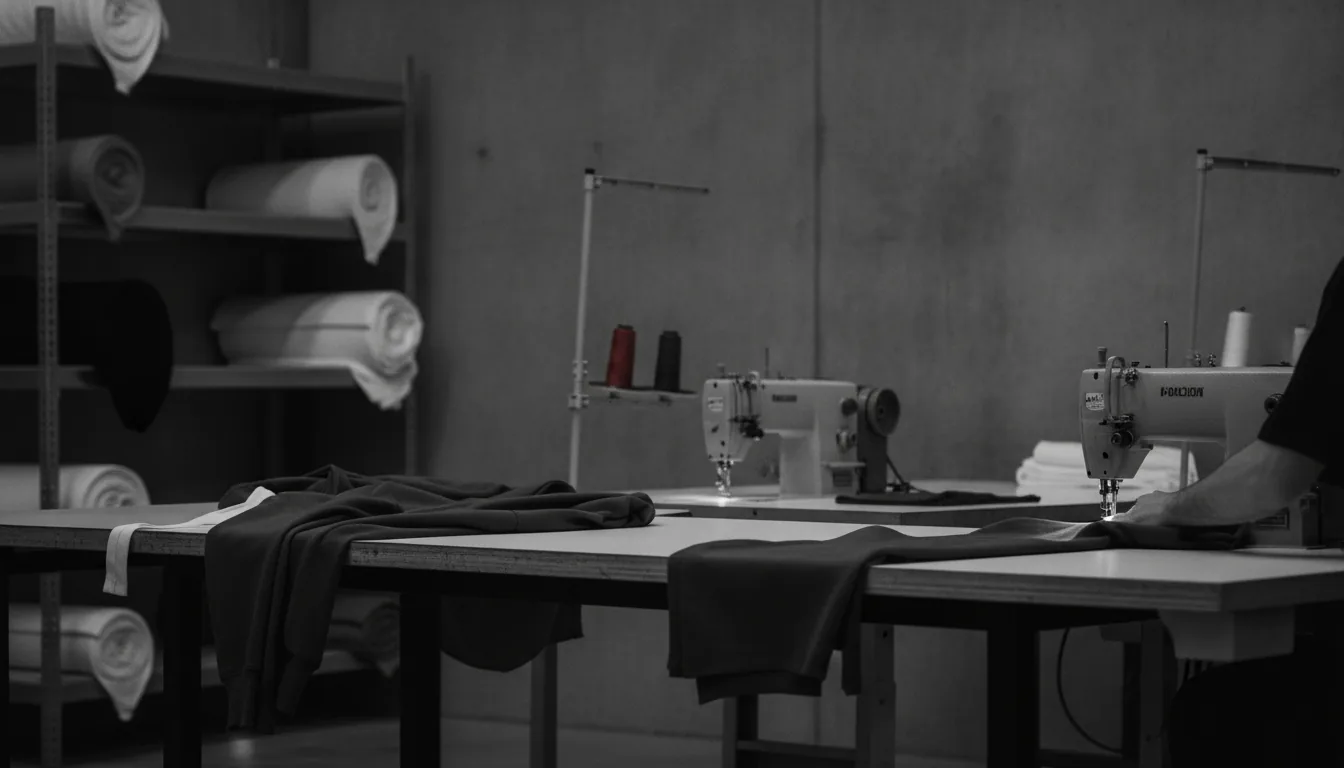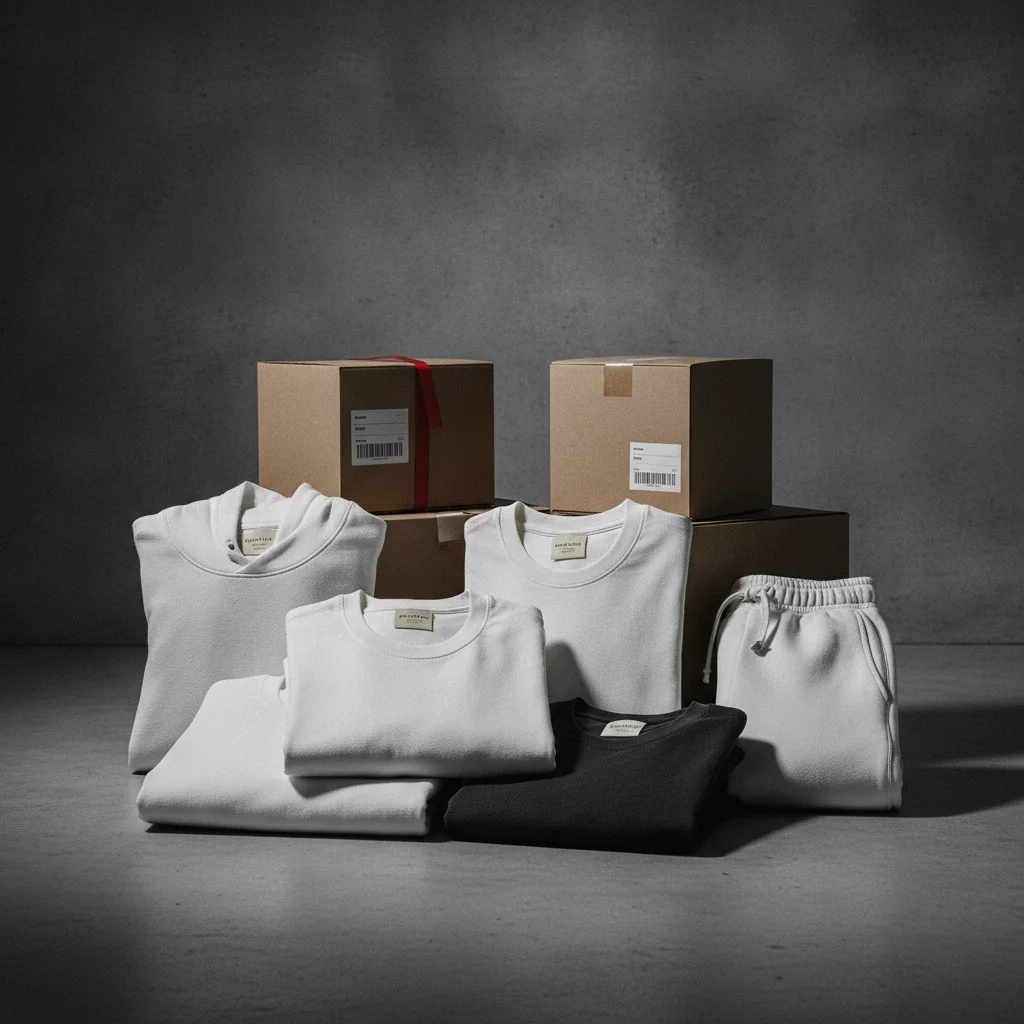
A pre-production sample is the final, factory-made garment a brand approves before bulk cutting begins – it uses the confirmed fabric, trims, labels and decoration, so what you sign off on is exactly what ships in bulk. It is the last checkpoint between your tech pack and a full production run, and skipping it is the single biggest cause of bulk orders arriving wrong.
Each stage of custom manufacturing builds toward this one sample. A pre-production sample (often shortened to “PP sample”) is not a design mockup or a rough prototype; it is a finished garment cut from production fabric, sewn on the same lines, decorated with the same method, and labeled with your private-label tags, so you are approving reality rather than a rendering.
What makes a sample “pre-production”
A pre-production sample sits at the end of a chain of earlier samples. A brand might first see a fit sample (checking measurements on a base pattern) or a proto sample (checking construction), but the pre-production sample is the one built from the fabric, colorway, trims and decoration method locked in the tech pack. Nothing about it is placeholder.
Because it uses production inputs, a pre-production sample answers questions earlier samples cannot: does 320 GSM fleece hold this puff-embroidery placement without distorting, does the acid-wash finish land in the right tone on this exact cotton blend, does the woven neck label sit flat after the first wash. These are production-floor questions, not design questions.
Why brands cannot skip this step
Bulk cutting commits fabric, labor and decoration capacity in one pass. If a fit is off, a print is misaligned, or a label is stitched into the wrong panel, that fault repeats across all 50, 200, or 2,000 pieces. A pre-production sample is the checkpoint that catches the fault on one garment instead of the whole run.
It also protects the brand commercially. A founder shipping a 300-piece drop to retail buyers or a direct audience cannot afford a batch that fits inconsistently or where the DTG print cracks after a wash. Approving a pre-production sample is the moment a brand converts risk into a documented, signed-off standard the factory is then held to.
This is why each build inside our custom clothing manufacturing process runs through a pre-production sample before bulk, regardless of order size.
What gets checked on a pre-production sample
A thorough review covers five areas, and each one is checked against the tech pack, not against opinion:
- Fit and measurements – chest, length, shoulder, sleeve and hem checked against the spec sheet’s tolerance, typically within a quarter-inch.
- Fabric and GSM – the actual weight and hand-feel of the cotton, French terry or fleece against the specified 240-400+ GSM range.
- Construction – seam type, stitch density, reinforcement at stress points like the hood seam or pocket bar-tack.
- Decoration – placement, registration and durability of screen print, DTG, embroidery, acid wash, or all-over print.
- Private label details – neck label, woven tag, hangtag and any interior branding stitched or applied exactly as specified.
The path from tech pack to approved sample
The sequence is linear and each step depends on the last. First, a completed tech pack locks the spec: measurements, fabric, trims, decoration and labeling. From that spec, the factory cuts a pattern and builds one sample garment using production-grade materials.
The sample ships (or is reviewed via photo and video for faster turnaround) and the brand checks it against the tech pack line by line. If anything is off, the factory corrects it and produces a second round. Once the sample is approved in writing, that exact spec becomes the standard the entire bulk order is measured against – no changes are made to materials or construction after this point without a new sample.
Reviewing a sample remotely vs in hand
Not all brands can hold the physical sample before a bulk decision, especially when the founder is based in the US, UK or an EU market and the factory is in Pakistan. A remote review using high-resolution photos, close-up shots of stitching and labels, and a short video showing drape and stretch covers most of what a physical review would catch, and it shaves days off the approval cycle.
For decisions that hinge on hand-feel – confirming a 400 GSM fleece reads as heavyweight rather than mid-weight, or checking how an acid-wash finish sits under natural light – shipping the physical sample is worth the extra transit time. Most brands use remote review for early rounds and reserve a physical sample for the final approval before bulk is scheduled.
Pre-production sample vs other sample types
Fit sample
Checks measurements and silhouette on a base pattern, often in a substitute fabric. Fast, early-stage, not production-grade.
Pre-production sample
Built from confirmed production fabric, trims, decoration and labels. The final checkpoint before bulk cutting starts.
How long a pre-production sample takes
For most products – hoodies, t-shirts, sweatshirts, tracksuits – a pre-production sample takes 7 to 14 days to produce once the tech pack is finalized and fabric is confirmed in stock or ordered. Complex decoration like all-over print or multi-color puff embroidery can add a few days, since dye-sublimation panels or extra embroidery passes need their own setup.
A second round, if changes are needed, typically adds another week. Brands working to a launch date should build this into their timeline rather than treating sampling as a formality that can be compressed; rushing this stage is what causes the fit or print issues it exists to prevent.
What happens if you skip the pre-production sample
Brands sometimes ask to move straight to bulk after seeing a digital mockup or an early fit sample, usually to save time. The risk is proportional to order size: on a 500-piece hoodie run, an unapproved fit issue or a decoration that reads differently on 380 GSM fleece than it did in a render becomes 500 garments to rework or write off, not one.
We do not run bulk production without an approved pre-production sample, because it is the only checkpoint that confirms production reality rather than intent. It costs one sample’s worth of time; the alternative can cost an entire run.
Cost of a pre-production sample
Sample cost reflects the same inputs as bulk – fabric, decoration method and labor – so a heavyweight fleece hoodie with puff embroidery costs more to sample than a basic screen-printed tee. Most brands treat the sample cost as a fixed part of launching a new design, since it is the only way to confirm the design works in physical form before committing to 50-plus units.
On reorders of an already-approved style, a new pre-production sample is not always required if fabric, colorway and decoration are unchanged – the original approved sample remains the standard for future runs.
Common reasons a pre-production sample gets rejected
Most rejections trace back to a small set of recurring issues, and knowing them ahead of time helps a brand review the sample with the right eye. Fabric weight variance is the most frequent: a fleece that measures 260 GSM instead of the specified 340 GSM changes hand-feel, drape and warmth, and no amount of finishing corrects it after the fact.
Misregistered prints and off-center placements are the second most common issue, particularly on garments with a chest logo and a back print that both need to align with the body’s centerline. Mismatched trims – a drawstring, zipper pull or label in the wrong colorway – are easy for a factory to overlook and easy for a brand to catch on a physical sample under real light.
Fit tolerance breaches round out the list: a chest measurement half an inch outside the spec sheet’s tolerance can throw off how a garment photographs and how a size run feels consistent from small to XXL. A pre-production sample exists to surface exactly these issues on one garment, where they cost a rework cycle instead of a bulk write-off.
Documenting the approved sample
Approval is not a verbal nod – it is a documented event. The brand signs off in writing against the tech pack, and the physical sample (or detailed photos and measurements if shipping is impractical) becomes the reference standard kept on file for the length of the order, and often for future reorders of the same style.
During bulk cutting and sewing, the factory’s quality-control team checks output against this retained reference, not against memory or a fresh reading of the tech pack. That is what makes the pre-production sample more than a one-time approval: it becomes the working benchmark for all units the line produces, which is why the sample review deserves the same scrutiny a brand would give the finished product itself.
How Minku handles pre-production samples
Once your tech pack is confirmed, we cut and build one sample using the production fabric, trims and decoration method specified, then send photos, video and, on request, the physical sample for review. You approve in writing before we schedule bulk cutting, and that approved sample becomes the fixed reference our production floor works against for the whole order.
Send your tech pack and we will confirm sample timing and cost for your product. Start with our cut-and-sew manufacturing page or Get Your Custom Quote.
What Is a Pre-Production Sample? — In Detail