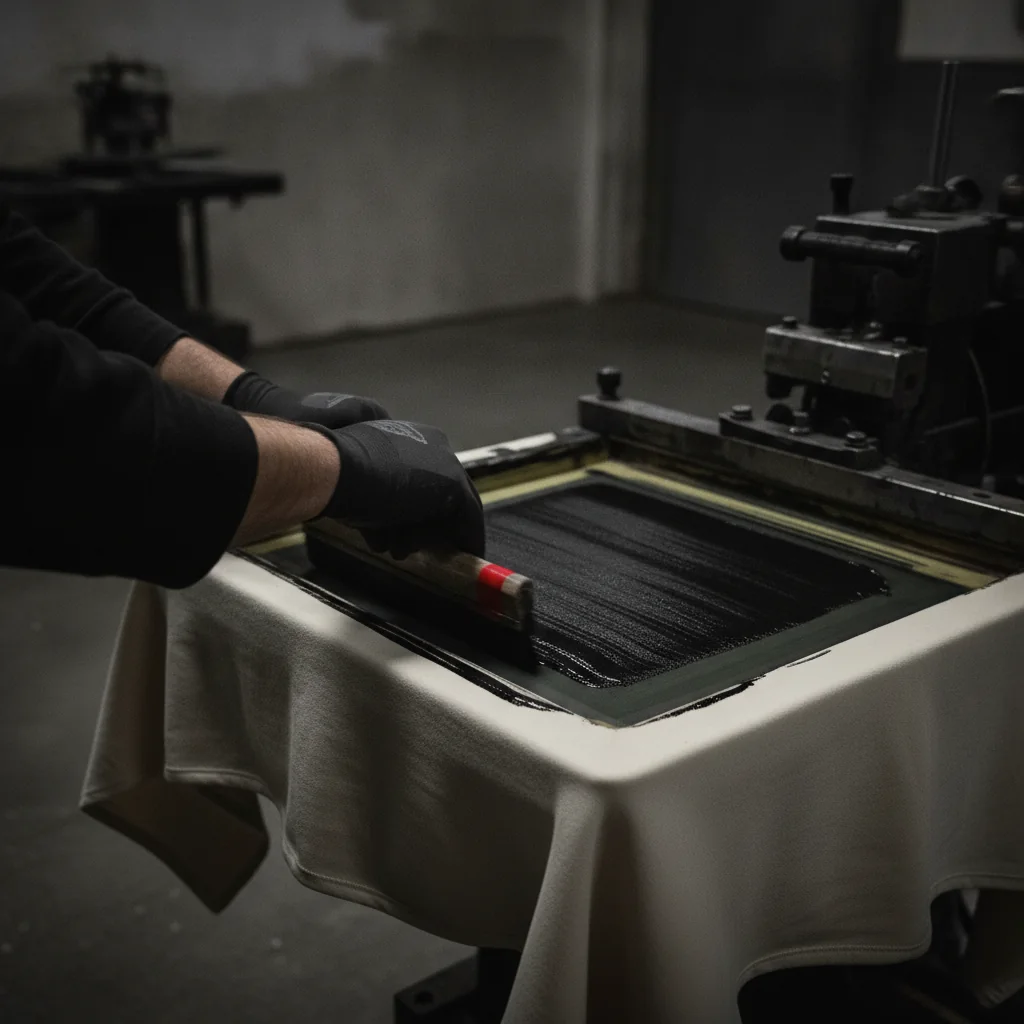
Screen printing wins on durability and cost per unit at volume, while DTG (direct-to-garment) wins on color complexity and low-quantity flexibility – most streetwear brands use screen printing for core drop designs and DTG for photorealistic or highly detailed one-off graphics. Minku runs both methods in-house, so a brand can match the decoration to the design instead of settling for whichever technique the factory happens to offer.
Two Methods, Two Different Jobs
Screen printing pushes ink through a mesh stencil, one screen per color, directly onto the fabric. DTG prints artwork straight onto the garment using an inkjet-style printer loaded with textile ink, the same way a home printer lays ink on paper but calibrated for cotton. Both methods are common in streetwear manufacturing, and the right choice depends on the design itself, the order volume, and how the finished print needs to perform over a year of wear and washing.
Getting this decision wrong is not a disaster, but it does waste money: DTG on a large simple logo costs more per unit than it should, and screen printing on a five-color photographic graphic either looks flat or requires so many screens the setup cost erases any savings.
Durability: Screen Printing’s Clear Advantage
Screen-printed ink sits on top of and partially binds into the fabric fibers, creating a thick, opaque layer that resists cracking and fading through repeated washing. A well-cured screen print on 240+ GSM cotton can outlast the garment itself. DTG ink sits closer to the fabric surface and, while modern water-based and pigment DTG inks have improved substantially, the print layer is thinner and more prone to gradual softening or fading over 30-50 wash cycles compared to a properly cured screen print.
For a brand’s core, repeat-selling designs – the pieces expected to stay in a customer’s rotation for years – screen printing is the safer long-term choice.
Color Complexity: DTG’s Clear Advantage
Screen printing requires one screen per color, so a five-color design needs five screens, five setup passes, and five alignment checks. Photographic gradients, complex shading, and multi-tone graphics are difficult or impossible to reproduce accurately with screen printing without an expensive process-color setup. DTG applies unlimited colors in a single pass because it is printing the full image directly, the same way a photo prints – gradients, photorealistic imagery, and fine detail reproduce with far less setup complexity.
Cost Per Unit at Different Volumes
Screen printing carries a fixed setup cost per design (burning screens, mixing ink, calibrating the press) that gets spread across the run – the more units printed, the lower the cost per piece. DTG carries close to zero setup cost per design but a higher per-unit ink and print cost that does not meaningfully drop with volume. This flips the economics depending on order size.
| Factor | Screen Printing | DTG |
|---|---|---|
| Best for volume | Higher volume, cost drops per unit | Lower volume, flat cost per unit |
| Best for color count | 1-3 solid colors | Unlimited colors, gradients, photo detail |
| Durability (wash cycles) | High – thick, cured ink layer | Moderate – thinner ink layer |
| Setup cost per design | Higher (screens per color) | Minimal |
| Feel on fabric | Slightly raised, can be soft-hand cured | Softer, closer to fabric surface |
At Minku’s MOQ, Which Method Fits?
At Minku’s MOQ of 50 pieces per design, both methods are viable, but the decision still comes down to the design itself rather than the order size alone. A 50-piece run of a bold two-color chest logo is efficient in screen printing even at that volume, because the setup cost is modest for a simple design. A 50-piece run of a detailed, multi-tone graphic is better suited to DTG, because burning five screens for a small batch adds cost without the volume to spread it across.
Combining Both on One Garment
Streetwear brands increasingly combine methods on a single piece: a screen-printed back graphic for durability and cost efficiency alongside a small DTG-printed detail element for color complexity, or a screen-printed base with puff embroidery on the chest for texture contrast. Because Minku runs screen print, DTG, and puff/flat embroidery in-house on the same factory floor, combining methods on one order does not require coordinating multiple vendors or shipping garments between subcontractors.
Fabric Compatibility Considerations
Screen printing performs consistently across most cotton and cotton-blend fabrics, including heavyweight 300-400 GSM fleece and French terry, because the ink cures into a fabric that holds the print well. DTG performs best on a high cotton-content fabric with a smooth, even weave – heavily textured fleece can sometimes reduce DTG print clarity compared to a smoother mid-weight cotton. This is worth discussing with your manufacturer before finalizing a decoration method on a heavyweight hoodie or sweatshirt.
Real Examples From Streetwear Drops
A brand launching a 100-piece drop of an oversized hoodie with a bold two-color back print and small chest logo typically runs both in screen print, since the design is simple enough that the durability and per-unit cost advantage matters more than color range. A brand producing a 60-piece limited run of a graphic tee with a photorealistic image transfer – a portrait, a detailed illustration, a gradient sunset – almost always needs DTG, because screen printing cannot reproduce that level of detail without an expensive, non-standard process.
What Happens to the Print Over Time
Both methods hold up acceptably with correct washing (cold wash, inside-out, avoid high-heat drying), but screen printing has a wider margin for error if a customer washes carelessly. This matters more for a brand’s flagship, always-in-stock designs than for a limited drop piece expected to be worn hard for one season and then retired – which is part of why brands frequently default to screen print for evergreen styles and open up to DTG for shorter-run, design-forward drops.
Setup Time and Turnaround Differences
Screen printing needs screens burned and a press calibrated before the first unit runs, which adds a short lead time on the front end of an order, especially for a multi-color design. DTG needs only a digital file prepared and color-profiled to the printer, so the first unit can print almost immediately once the file is approved. For a brand on a tight launch calendar with a complex graphic, DTG’s shorter setup window can matter as much as its color range.
Environmental and Wash-Care Differences
Screen printing with plastisol ink cures under high heat and, once cured, is largely unaffected by home washing as long as care instructions are followed. Water-based screen ink and pigment DTG ink both rely on the fabric absorbing color rather than sitting fully on top, which gives a softer hand-feel but places more importance on correct wash care – cold water and low heat drying extend the life of both considerably. Brands promoting a soft-hand, no-plastic-feel print often lean toward water-based screen printing or DTG for this reason, accepting a slightly shorter wash-life ceiling in exchange for the feel.
Minimum Order Considerations by Method
Because screen printing carries a real per-design setup cost, some manufacturers set a higher practical minimum for screen-printed designs than for DTG, where the marginal cost per unit stays flat whether the order is 20 pieces or 200. At Minku, both methods are available from the standard 50-piece MOQ, but a brand ordering under 50 units of a single screen-printed design should expect the setup cost to weigh more heavily on the per-unit price than it would on a larger run.
How Minku Helps You Choose
When a brand sends a tech pack or design file, Minku reviews the color count, detail level, fabric choice, and expected order volume, then recommends screen printing, DTG, or a combination – rather than defaulting to whichever method happens to run more efficiently for the factory. Each recommendation is followed by a pre-production sample so the brand sees the actual print quality before bulk cutting begins.
Not sure which method fits your design? Get Your Custom Quote and send us your artwork – we will recommend the right decoration method for your volume.
See the full decoration process on our screen printing clothing manufacturer page, compare against direct-to-garment printing at DTG printing manufacturer, or return to the custom clothing manufacturer hub.
Screen Printing vs DTG: Which Is Better for Your Brand? — In Detail