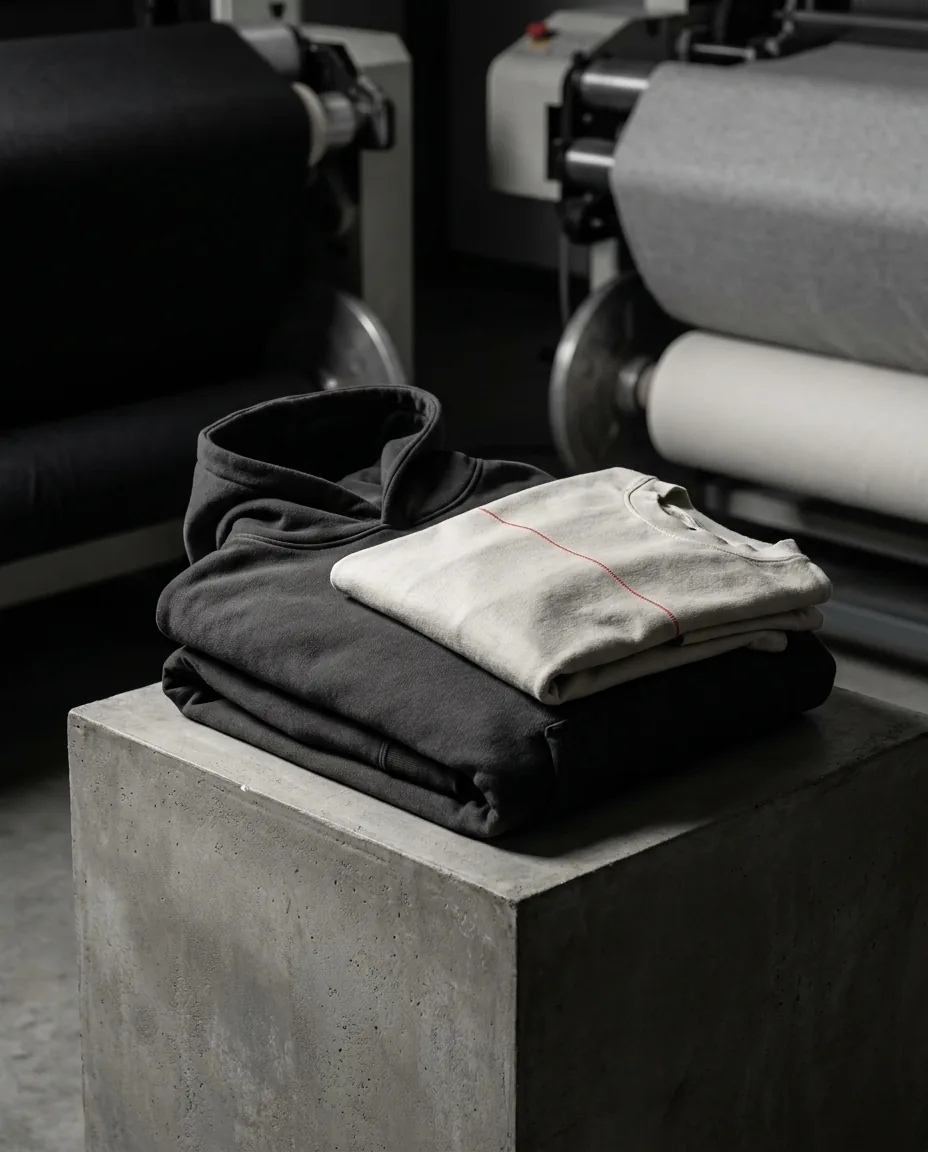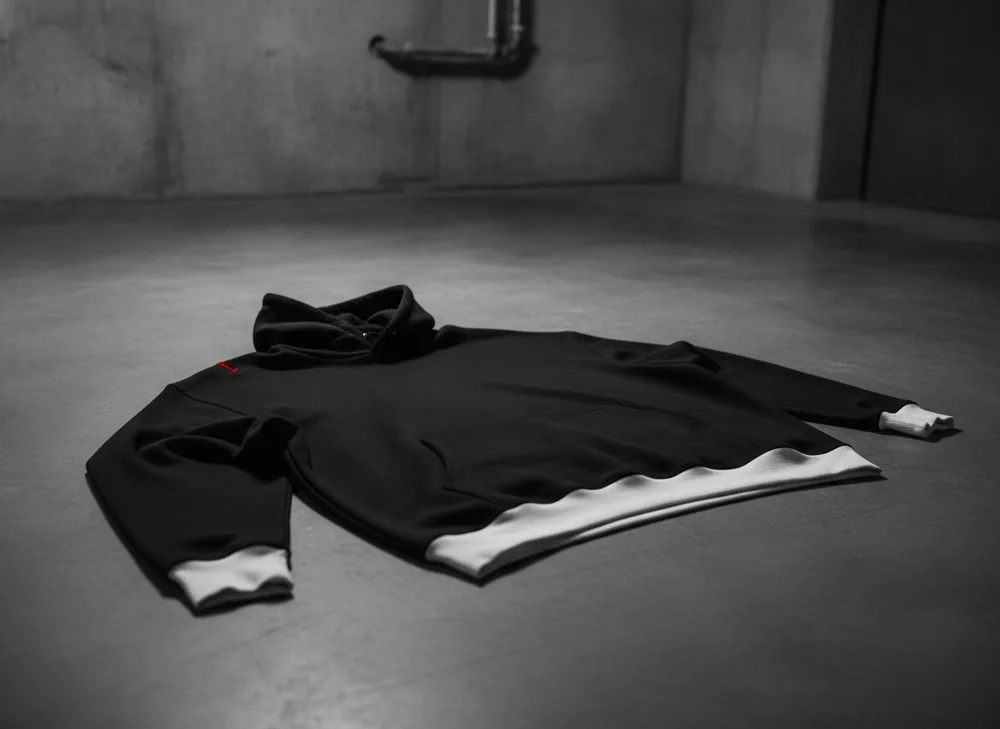
The perfect oversized fit comes from a deliberate drop-shoulder pattern, added body width and length cut beyond a standard block, and a fabric heavy enough – 240+ GSM for tees, 400+ GSM for hoodies – to hold its shape instead of sagging after a wash cycle. A true oversized fit adds 3 to 6 inches of body width over a regular fit at the same size label, along with a dropped shoulder seam and extended body length, not a customer simply buying a size up in a regular-fit block.
Oversized has become the default silhouette across streetwear, but a well-executed oversized garment and a garment that reads as baggy come down to specific pattern and fabric decisions. This guide breaks down what separates the two, and what to put in a tech pack to get an oversized fit right on the first sample.
Why Oversized Dominates Streetwear Silhouettes
Oversized fits carry over from skate and hip-hop wardrobes where a looser, dropped silhouette signaled comfort and a distinct look apart from fitted mainstream basics. That heritage is part of why the fit still reads as authentic streetwear rather than a passing trend – it is tied to a real style lineage, not a marketing label applied to an otherwise standard tee. Brands building a line around this silhouette are tapping into an established visual language that customers already recognize on sight, which is part of why getting the pattern right (rather than approximating it with a size-up) matters for how the finished garment is read.
Oversized vs Regular vs “Sizing Up”
Sizing up in a regular-fit pattern adds width but keeps the shoulder seam at the natural shoulder point and the sleeve and body length proportional to the smaller size – the result reads as a big regular-fit garment, not an oversized one. A true oversized pattern is graded from the ground up: the shoulder seam drops past the natural shoulder line, the sleeve is cut wider and often shorter relative to body width, and the body is both wider and longer than a regular-fit block at the same size label. This is a distinct pattern, not a scaled-up version of a fitted one.
Drop-Shoulder Construction
The drop-shoulder seam is the single most defining feature of an oversized silhouette. Instead of sitting at the top of the shoulder, the seam drops 1 to 3 inches down the arm, which is what creates the relaxed, squared-off shoulder line associated with oversized tees and hoodies. Getting this measurement right in the tech pack is critical – too little drop and the garment reads as a large regular fit; too much and the shoulder seam sits mid-bicep, which reads as ill-fitting rather than intentional. See our full guide on what a drop-shoulder fit is for construction detail specific to this seam.
Fabric Weight Holds the Shape
An oversized garment in lightweight fabric sags, stretches out of shape after a few washes, and loses the clean silhouette that makes oversized fits work. Fabric weight is what keeps the extra body width and length structured rather than shapeless. For tees, 220 to 240+ GSM combed cotton has enough body to drape cleanly at an oversized cut. For hoodies, 400+ GSM fleece or French terry holds the dropped shoulder and boxy body shape wash after wash, where a sub-300 GSM fleece would go limp within a season.
Pattern Grading: The Measurements That Matter
| Measurement | Regular Fit | Oversized Fit |
|---|---|---|
| Chest width | Standard block | +3 to 6 in |
| Body length | Standard block | +1.5 to 3 in |
| Shoulder seam | At natural shoulder | Dropped 1-3 in |
| Sleeve width | Tapered | Wider, boxier |
These four measurements, specified precisely in a tech pack, are what a pattern maker needs to grade an oversized block correctly rather than guess at “make it big” instructions.
T-Shirt vs Hoodie Considerations
Oversized tees rely almost entirely on the drop-shoulder seam and added width and length, since there is no hood or pocket to balance visually. Oversized hoodies need the drop shoulder plus a proportionally sized hood and kangaroo pocket – a hood cut for a regular-fit hoodie looks undersized on an oversized body, which is a common fit mistake in first-round samples. Confirm hood and pocket sizing scale with body width in the tech pack, not only torso measurements.
Decoration Placement on an Oversized Canvas
An oversized garment gives a larger, flatter print or embroidery canvas across the chest and back – which is part of why oversized fits pair naturally with large-scale graphics, all-over prints, and back-panel embroidery. Placement measurements should be specified relative to the oversized pattern’s actual dimensions, not a regular-fit garment’s placement grid, or a graphic ends up positioned too high or too small for the larger canvas.
Oversized Fit Beyond Tees and Hoodies
The same drop-shoulder construction and fabric-weight logic apply to oversized crewneck sweatshirts, sweatsuits, and tracksuits – the shoulder seam drops, the body runs wider and longer than a regular-fit block, and the fabric needs enough weight to hold that extra volume. A matching oversized sweatsuit set adds one more variable: the top and bottom need to be graded to the same proportional add so the set reads as one silhouette rather than a mismatched oversized top over a regular-fit jogger. Confirm both pieces are graded from the same oversized block when ordering a set.
Fit-Testing With a Physical Sample
A tech pack measurement spec is only a starting point – the fit needs to be confirmed on a physical pre-production sample, ideally tried on a body close to the target size range rather than assessed from measurements on paper alone. Photograph the sample from the front, back, and side, and check the shoulder drop point, chest width, and body length against the tech pack’s stated adds before approving the fit for bulk cutting. A second fit-sample round is common when the first round is close but not exact, and is worth the extra week rather than approving a fit that is slightly off.
Sizing Considerations Across Markets
US, UK, and EU size labeling conventions differ slightly even before an oversized grade is applied, so a brand selling across all three markets should confirm whether size labels follow US sizing, UK sizing, or EU numeric sizing on the tech pack, and grade the oversized adds consistently against whichever convention is chosen. Mixing conventions across a size run is a common source of inconsistent fit complaints once a brand starts shipping the same design to multiple markets.
Grading Across a Full Size Run
An oversized fit still needs a consistent grade rule across small through triple-extra-large – each size step should add the same proportional increase to chest, body length, and sleeve width so the drop-shoulder line and boxy silhouette hold at each size, not only the sample size. Ask a factory’s pattern team to confirm the grade rule applied across the full size run before bulk cutting begins, since an inconsistent grade is a common reason an oversized fit looks right in a medium sample but reads as an oddly-proportioned large or extra-large.
Common Mistakes That Read as Baggy Rather Than Oversized
- Sizing up a regular-fit block instead of grading a true oversized pattern – shoulder seam stays in the wrong place.
- Using lightweight fabric that loses structure and looks shapeless after a few washes.
- Leaving hood and pocket proportions unchanged on an oversized hoodie pattern.
- Placing decoration using a regular-fit grid on an oversized garment, leaving graphics off-center or undersized.
Specifying an Oversized Fit in a Tech Pack
A tech pack requesting an oversized fit should include: exact chest width and body length adds over a stated regular-fit baseline, the shoulder drop measurement, sleeve width, and – for hoodies – hood and pocket scaling. A factory’s pattern team should confirm these measurements back against a graded spec sheet before cutting a sample, not after. Include a reference garment photo alongside the numeric spec where possible – a pattern maker working from both a measurement sheet and a visual reference produces a first sample closer to the intended silhouette than one working from numbers alone.
How Minku Apparel Manufactures Oversized Fits
Minku Apparel manufactures custom oversized t-shirts and hoodies from its Pakistan factory using dedicated oversized pattern blocks – not scaled-up regular-fit patterns – in 220-240+ GSM combed cotton for tees and 400+ GSM fleece for hoodies. Each oversized fit is sampled and approved against the tech pack’s exact measurements before bulk cutting, with MOQ from 50 pieces per design and full private label branding on each order.
For the full product range built on this fit, see our custom oversized t-shirt manufacturer page, our custom oversized hoodie manufacturer page, and for the wider streetwear manufacturing picture, our custom streetwear manufacturer pillar.
How to Get the Perfect Oversized Fit — In Detail