An overseas clothing manufacturer beats a domestic one on MOQ, fabric weight, and cost per unit for almost all streetwear brands under 5,000 units a year, while a domestic cut-and-sew shop only wins on speed for small, local reorders. Minku Apparel runs an overseas factory in Pakistan built for exactly this comparison: 240-400+ GSM fabric, private label from 50 pieces per design, and DDP shipping that removes the customs guesswork brands worry about when they hear the word overseas.
Why This Comparison Keeps Coming Up
Each brand founder researching how to manufacture a clothing line runs into the same fork in the road. A domestic manufacturer – a cut-and-sew shop in the same country as the brand – promises shorter shipping and easier factory visits. An overseas manufacturer promises heavier fabric, lower minimums, and a landed cost that leaves room for a real margin. Both claims hold up in practice. The mistake brands make is picking based on geography alone instead of matching the manufacturer to what the brand needs at its current stage.
For a brand doing its first 50 to 500 piece run of custom hoodies or custom t-shirts, MOQ and fabric quality decide the outcome more than a few days of shipping time. For a brand already moving thousands of units a month with retail accounts expecting fast reorders, the calculation shifts. This page breaks down both sides honestly so a founder can place their own brand on the map before committing.
MOQ: The First Filter
Domestic cut-and-sew shops, especially in the US and UK, commonly set minimums of 150 to 500 pieces per style, and some require a minimum spend rather than a minimum unit count. That prices out a brand testing three or four designs before its first drop. Overseas manufacturers built around private label – Minku included – routinely accept 50 pieces per design, because the factory runs multiple brands’ small batches through the same cutting and sewing lines efficiently.
This single number changes what a launch looks like. A domestic MOQ of 300 pieces per style forces a brand to commit to one design at scale. An overseas MOQ of 50 lets the same brand launch five designs, see which one reorders, and put the follow-up capital behind the winner instead of guessing up front.
Fabric Weight and Construction Quality
This is where the overseas-vs-domestic conversation gets more nuanced than most guides admit. Fabric quality is not determined by geography – it is determined by the specific factory’s sourcing and quality control, and both overseas and domestic factories range from thin fast-fashion knits to heavyweight premium builds. What overseas manufacturing enables is access to lower-priced heavyweight cotton and French terry inputs at the same price point where a domestic shop would have to charge substantially more to hit 300-400 GSM.
Minku manufactures across 240-400+ GSM cotton, French terry, and fleece, because the factory’s location gives it direct access to South Asian cotton mills without the markup a domestic manufacturer pays to import the same raw fiber. A brand chasing an oversized, heavyweight streetwear silhouette – the look driving most premium drops in 2026 – gets there more efficiently through an overseas supply chain built on that fabric base.
Cost Per Unit: What Actually Moves the Number
Labor cost is the most obvious driver, but it is not the only one. Fabric sourcing cost, factory overhead, and order size all compound. A domestic factory paying higher hourly labor rates and importing its own heavyweight cotton stacks two cost increases on top of one another. An overseas factory sourcing fabric locally and running labor at regional rates stacks two cost reductions instead. The gap widens further at small order volumes, because domestic shops often add small-batch surcharges that overseas manufacturers running dedicated private-label lines do not need.
| Factor | Domestic Manufacturer | Overseas (Minku) |
|---|---|---|
| Typical MOQ | 150 – 500 pcs per style | From 50 pcs per design |
| Heavyweight fabric access (300+ GSM) | Available, priced higher | Standard offering, competitively priced |
| Private label / OEM | Sometimes limited | Full private label included |
| Shipping to US/UK/EU | 1 – 3 days, no customs | 5 – 9 days DDP, duty prepaid |
| Reorder speed | Faster for small top-ups | Predictable, batched cycles |
| Minimum spend requirements | Common on top of unit MOQ | Tied to unit count only |
Shipping Time and DDP: Removing the Fear Factor
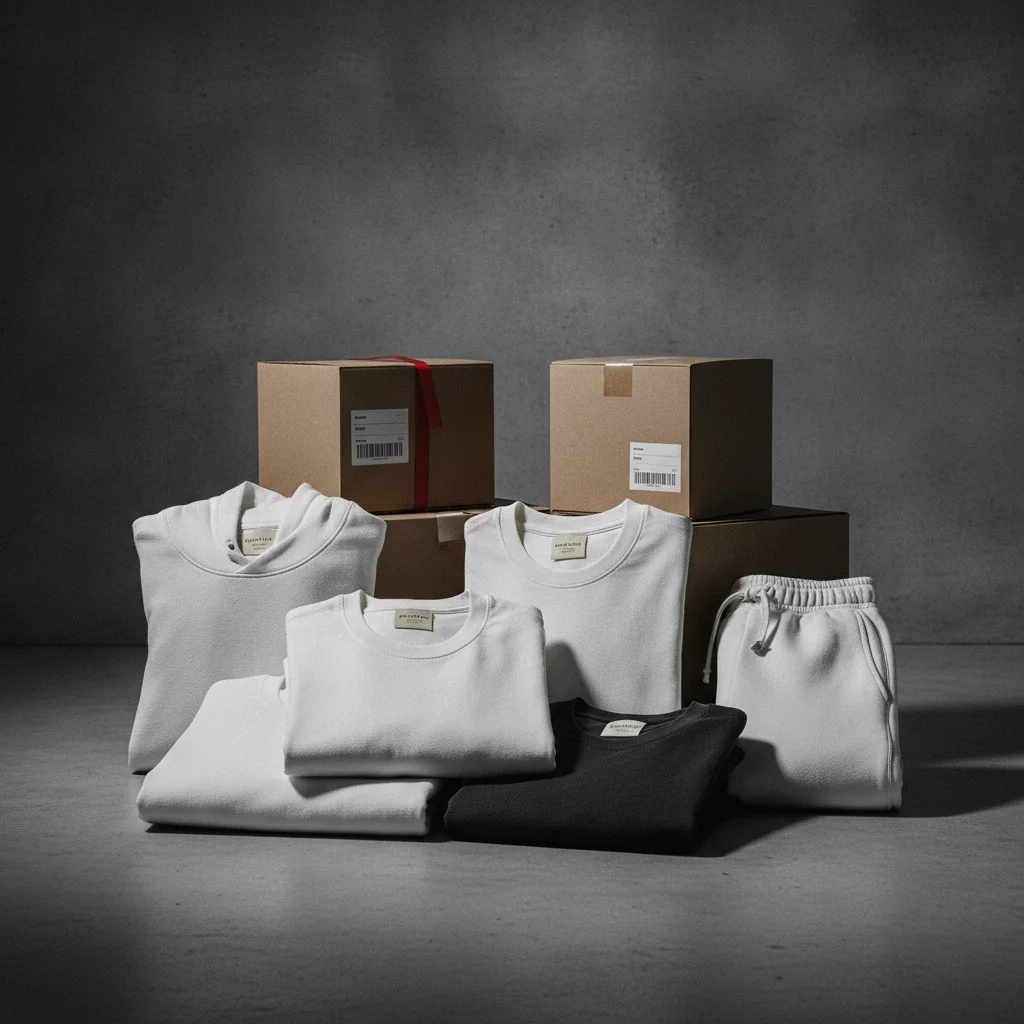
The honest downside of overseas manufacturing is transit time. Domestic shipping to a brand’s own warehouse can land in a day or two. Overseas DDP shipping from Pakistan to the US or UK typically runs 5 to 8 days by air, and to mainland Europe 6 to 9 days – both under DDP terms, meaning duty and customs clearance are handled before the shipment reaches the brand’s door. That removes the two things founders fear most about overseas sourcing: a package stuck in a customs office, or a surprise duty bill on arrival.
For a brand planning drops on a monthly or bi-monthly cadence – the normal rhythm for streetwear – a week of transit time is a planning input, not a bottleneck. It only becomes a problem for brands promising same-week reorders to a large retail account, which is a rare requirement outside a handful of accounts.
Quality Control and Sampling: Where Overseas Manufacturers Have Caught Up
An older objection to overseas manufacturing was inconsistent quality control and no way to check a garment before a full production run. That gap has closed. A structured overseas manufacturer builds sampling into the process by default: a tech pack goes in, a pre-production sample comes back for approval, and only after sign-off does bulk cutting start. Minku runs all private label orders through this sequence, so the brand sees and approves the fabric, fit, and decoration before committing to 50, 100, or 500 pieces.
Domestic manufacturers offer the same sampling step, but it does not automatically make quality control better – it makes the feedback loop physically faster. If the sample is right the first time, that speed advantage barely matters.
Private Label and Branding Depth
Full private label – custom neck labels, woven tags, hangtags, and branded packaging – is standard at overseas manufacturers built for OEM work, because the whole business model assumes each client is a distinct brand needing its own trims. Domestic cut-and-sew shops sometimes treat labeling as an add-on service with its own minimum, which can undercut a brand’s ability to launch under its own name at low volume.
Minimum Spend Traps to Watch For
A number quoted as a low per-unit MOQ can hide a minimum spend requirement that pushes the real order size much higher than expected. A domestic shop advertising a 100-piece MOQ may still require a total order value that only makes sense at 300 pieces once fabric and setup fees are added. Overseas manufacturers built for private label, including Minku, tie pricing to the stated unit count rather than layering in a hidden spend floor, which matters for a founder budgeting a first run precisely.
When Domestic Actually Wins
Domestic manufacturing earns its place in a few specific situations: a brand needing a 20-piece sample run turned around in 48 hours for a trade show, a brand with a hyper-local “Made in USA” or “Made in UK” claim as a core part of its marketing, or a brand whose retail partner contractually requires domestic production. Outside those cases, the MOQ, fabric-cost, and private-label advantages of an overseas manufacturer tend to outweigh the shipping-time cost for a growing streetwear brand.
A Practical Framework for Deciding
Founders comparing the two routes should answer four questions before committing: how many pieces per design can the brand realistically sell in the first three months, how heavy does the fabric need to be for the intended silhouette, how tightly does the launch calendar depend on a fixed shipping window, and does any retail partner require domestic sourcing contractually. A brand answering “under 300 pieces,” “260 GSM or heavier,” “flexible by a week,” and “no retail requirement” is squarely in overseas-manufacturer territory. Change any one of those answers and the calculation can shift toward domestic.
How Minku Handles the Overseas Trade-Offs
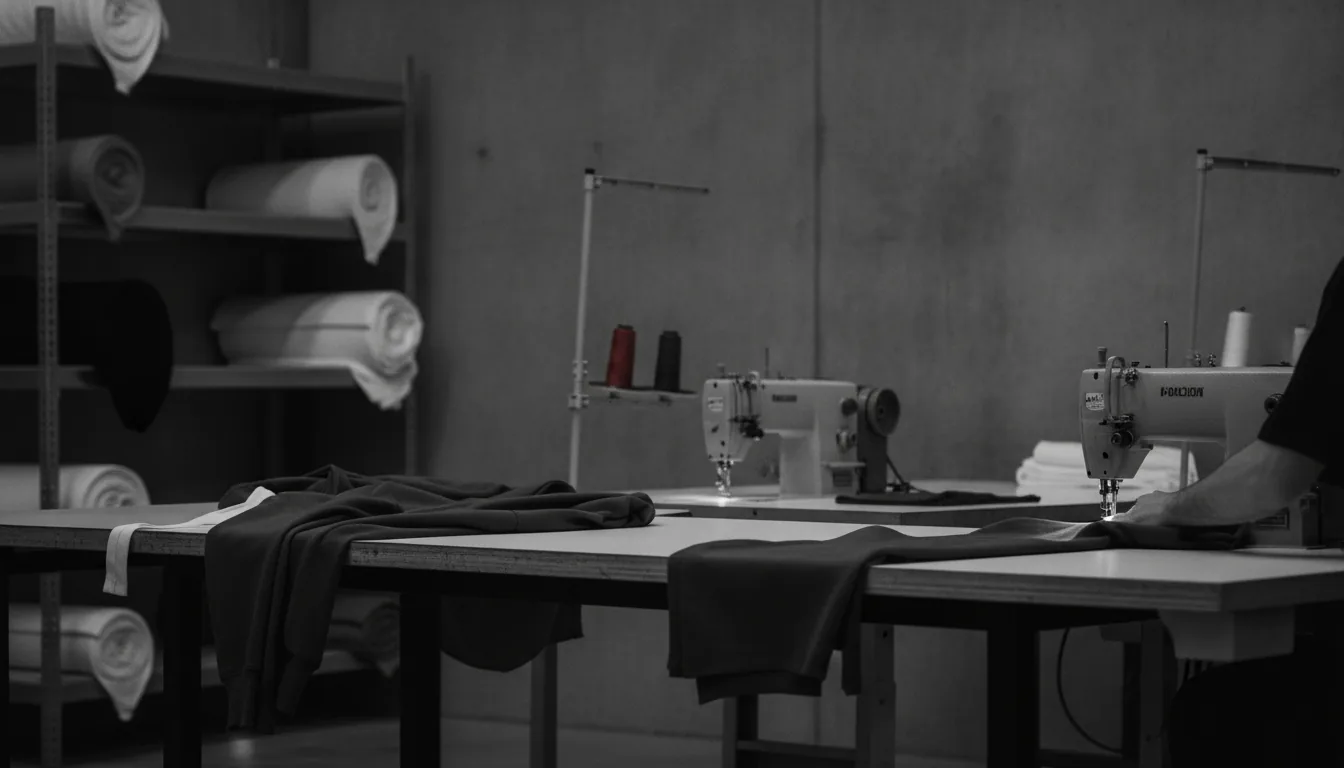
Minku’s model is built to close the specific gaps that make founders hesitate about overseas sourcing: MOQ from 50 pieces removes the volume risk, 240-400+ GSM fabric options remove the quality risk, in-house screen print, DTG, and embroidery keep decoration on one production floor instead of a third-party subcontractor, and DDP shipping to the US, UK, and Europe removes the customs risk. Sampling and tech pack review happen before any bulk cutting, so the brand sees exactly what it is getting before committing capital.
Ready to compare the two paths for your own line? Get Your Custom Quote and we will walk through MOQ, fabric, and landed cost for your specific product mix.
Explore the full picture at our custom clothing manufacturer hub, or go deeper on how the factory floor actually works on our cut-and-sew manufacturer page.
Overseas vs Domestic Clothing Manufacturer — In Detail