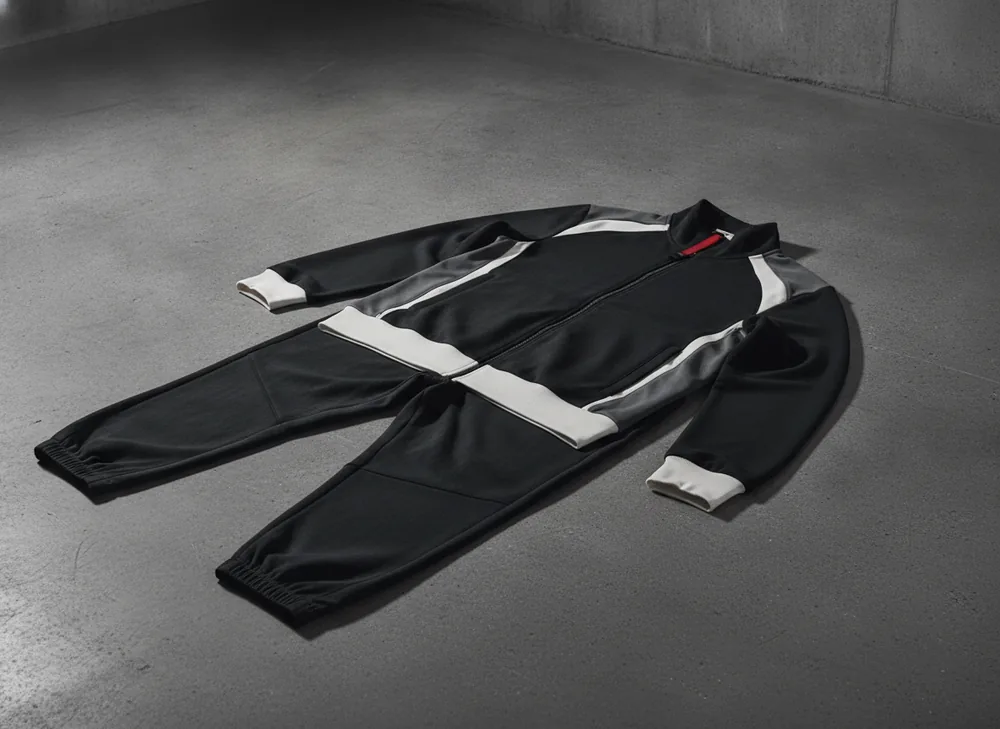
Custom tracksuits typically retail at 3 to 5 times the landed manufacturing cost, meaning a set costing $18-$24 to manufacture and ship DDP usually retails between roughly $65 and $115, depending on the brand’s positioning, decoration complexity, and sales channel. The right multiplier for a given brand depends on how much margin needs to cover marketing, returns, platform fees, and packaging, on top of a genuine profit, and it should be calculated deliberately rather than copied from a competitor’s storefront price.
Why a Simple Cost-Plus Markup Falls Short
New brands often price by doubling manufacturing cost and stopping there, which covers the garment but leaves nothing for the costs that sit alongside it: payment processing fees, platform or marketplace commission, returns and exchanges, marketing spend to drive the sale in the first place, and a genuine profit margin the brand can reinvest. A tracksuit manufactured for $20 and sold for $40 can look profitable on paper until marketing spend, a 10-15% return rate, and payment fees are subtracted, at which point the actual margin left is thin or negative.
Pricing needs to work backward from all of these costs stacked on top of the manufacturing price, not forward from the manufacturing price alone.
Building a Full Cost Stack Before Setting Retail Price
Start with the landed manufacturing cost per unit (fabric, construction, decoration, private label, and DDP shipping combined – covered on the tracksuit cost breakdown page). Add estimated payment processing fees (typically 2.5-3.5% of the sale price on most card processors). Add platform or marketplace fees if selling through a channel that takes a commission. Add a return-and-exchange reserve based on the brand’s expected return rate (streetwear apparel commonly runs 8-20% depending on fit consistency and sizing clarity). Add a marketing cost estimate per unit sold, based on planned ad spend divided by expected units moved. What remains after all of this is subtracted from the retail price is the brand’s actual margin.
Typical Markup Multiples by Positioning
| Brand Positioning | Typical Multiple | Example Retail (on $20 landed cost) |
|---|---|---|
| Entry / high-volume streetwear | 2.5x-3x | $50-$60 |
| Mid-tier streetwear label | 3x-4x | $60-$80 |
| Premium / limited-drop label | 4x-6x | $80-$120 |
Higher multiples are not solely about extracting more profit – premium and limited-drop positioning typically carries lower unit volume, more marketing spend per unit, and a scarcity-driven sales model, all of which the higher multiple needs to cover.
How Decoration and Fabric Choice Affect Pricing Room
A heavyweight fleece tracksuit with embroidery and a garment-dye finish carries a higher landed cost than a basic single-color-print fleece set, but it also supports a higher retail price and often a stronger multiple, since the finished product visually and physically supports a premium price point to the customer trying it on. A brand pricing a basic set at the same multiple as a heavily-decorated set risks under-pricing the premium piece relative to what a customer will pay for it, leaving margin on the table.
Competitive and Market-Based Pricing Checks
Cost-plus math sets a floor, but a brand should also check what comparable streetwear labels charge for a similar tracksuit set (fabric weight, decoration complexity, drop exclusivity) to confirm the calculated retail price sits within what the target customer already expects to pay in that category. A price set meaningfully above the category norm needs a clear reason a customer can see (heavier fabric, more complex decoration, limited quantity) or it risks feeling out of step with the market. A price set well below the category norm can undercut the brand’s own margin without necessarily winning more customers, since streetwear buyers often associate price with quality and exclusivity rather than shopping purely on lowest price.
Pricing for Wholesale vs Direct-to-Customer
A brand selling wholesale to boutiques or retailers needs to build in a wholesale price reduction off retail price (commonly a 50% wholesale rate, sometimes called keystone pricing) while still covering its landed manufacturing cost and margin at that reduced price point. This usually means setting suggested retail price high enough that the wholesale price still clears a reasonable margin after the boutique’s cut. A brand selling direct-to-customer through its own site or social channels keeps the full retail margin but carries all of the marketing cost itself, which should be factored into the cost stack described above rather than treated as a separate, unaccounted expense.
A Worked Pricing Example
Take a mid-tier streetwear brand with a landed manufacturing cost of $19 per tracksuit set (heavyweight fleece, two-color print, embroidered logo, private label, DDP shipping included). Adding a 3% payment processing fee ($0.57), a 15% return reserve ($2.85), and a $4 per-unit marketing cost estimate brings the effective cost to roughly $26.40. Applying a 3.5x multiple on the base $19 landed cost sets retail at $66.50, leaving approximately $40 of gross margin per unit after the full cost stack – enough to cover overhead and reinvest in the next drop, while remaining within the mid-tier price range shown in the table above.
Common Pricing Mistakes to Avoid
Pricing only off the manufacturing quote without adding payment fees, returns, and marketing cost is the most frequent error, leading to a retail price that looks profitable until real-world costs are subtracted. Copying a competitor’s exact retail price without knowing that competitor’s manufacturing cost, order volume, or margin structure can lock a brand into an unsustainable price for its own cost base. Changing price frequently after launch erodes customer trust in a brand’s pricing – it is worth running the full cost-stack calculation once, before launch, rather than changing retail price reactively after a slow sales week.
Pricing for a Limited Drop vs an Ongoing Catalog Item
A limited-run drop (a fixed quantity, sold once, not restocked) can support a higher multiple than a standing catalog item, since scarcity itself becomes part of the value the customer is paying for, and the brand is not competing against its own past-season inventory on price. A catalog tracksuit kept in stock across multiple seasons needs a multiple that remains sustainable through markdowns on slow-moving sizes or colors, since some portion of a standing SKU typically ends up sold at a reduced price to clear inventory before the next season’s designs launch.
Brands planning a limited-drop model should price close to the top of their positioning tier’s multiple range, since there is no markdown cycle to plan for. Brands running a standing catalog should price with a small buffer above their target multiple, anticipating that a portion of units will eventually sell at a lower price during a clearance period.
How Currency and Market Differences Affect Pricing
A brand selling primarily in GBP or EUR needs to convert its landed USD cost (if quoted in USD) at a current exchange rate before applying its multiple, and should build in a buffer for currency movement between the quote date and the sales period, since a shift of a few percentage points in exchange rate can meaningfully change margin on a high-volume item priced at a modest per-unit rate like a tracksuit. Brands selling across multiple currencies (USA, UK, and EU simultaneously) often round retail price to a market-appropriate figure in each currency (for instance USD 75 / GBP 65 / EUR 70) rather than applying one flat exchange-rate conversion, since round pricing tends to convert better at checkout than an oddly precise converted figure.
Reviewing and Revising Price After Launch
A pricing model built before launch is a starting point, not a fixed rule. After the first drop sells through, a brand should review actual return rate, actual marketing cost per unit sold (not the estimate used pre-launch), and actual payment processing cost, then compare those figures against the assumptions used in the original cost stack. If real return rate ran lower than the 15% estimated, for example, a brand has room to either improve margin at the same price or use that margin room to invest further in marketing for the next drop. This review should happen once per drop cycle, not continuously, to avoid the price instability that comes from reacting to short-term sales swings. A consistent, once-per-cycle review also gives a brand a reliable record of how its assumptions compare with reality over several drops, which sharpens the accuracy of future cost stacks rather than leaving each new pricing decision to start from a rough estimate again.
How Minku Apparel Supports Pricing Decisions
Minku Apparel quotes a full landed, DDP unit cost for a tracksuit design before bulk production, giving a brand a fixed number to build its retail pricing calculation on rather than an estimate that shifts once shipping and duty are added later. That fixed landed cost is what makes the cost-stack method above reliable – a brand knows its true unit cost from the outset and can price with confidence rather than guessing at shipping and duty during launch planning.
Brands finalizing a pricing model can check the full tracksuit manufacturing cost breakdown, review the manufacturing timeline to plan a launch date, or see the custom tracksuit manufacturer overview for the complete process. A design ready for a firm landed cost can move straight to get a custom quote.
How to Price Your Custom Tracksuits for Retail — In Detail