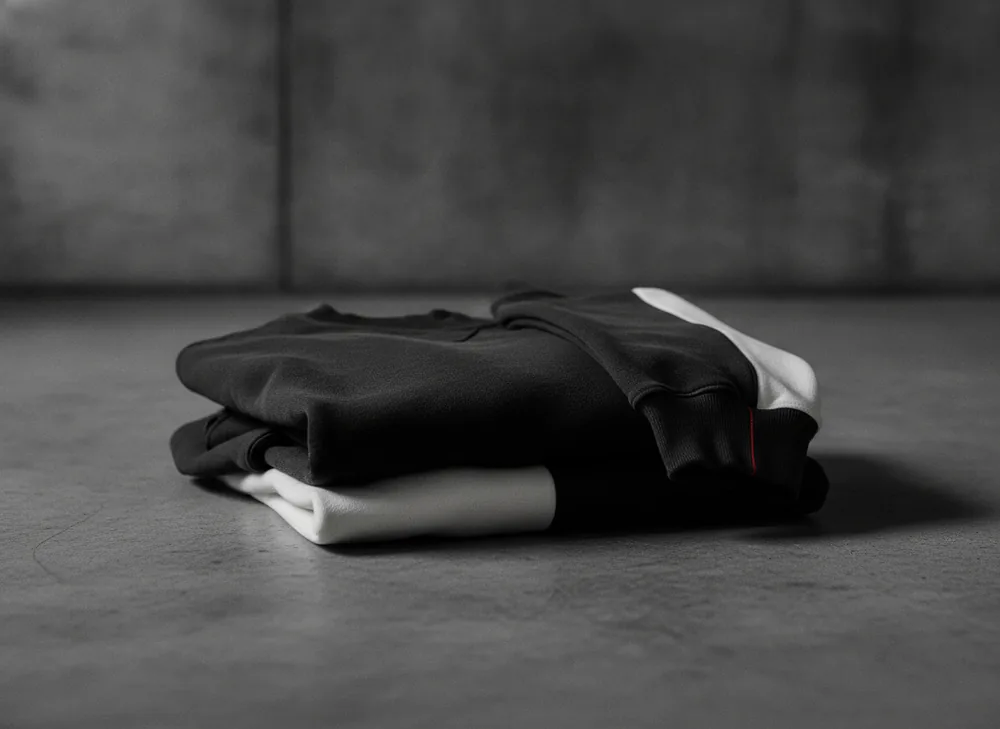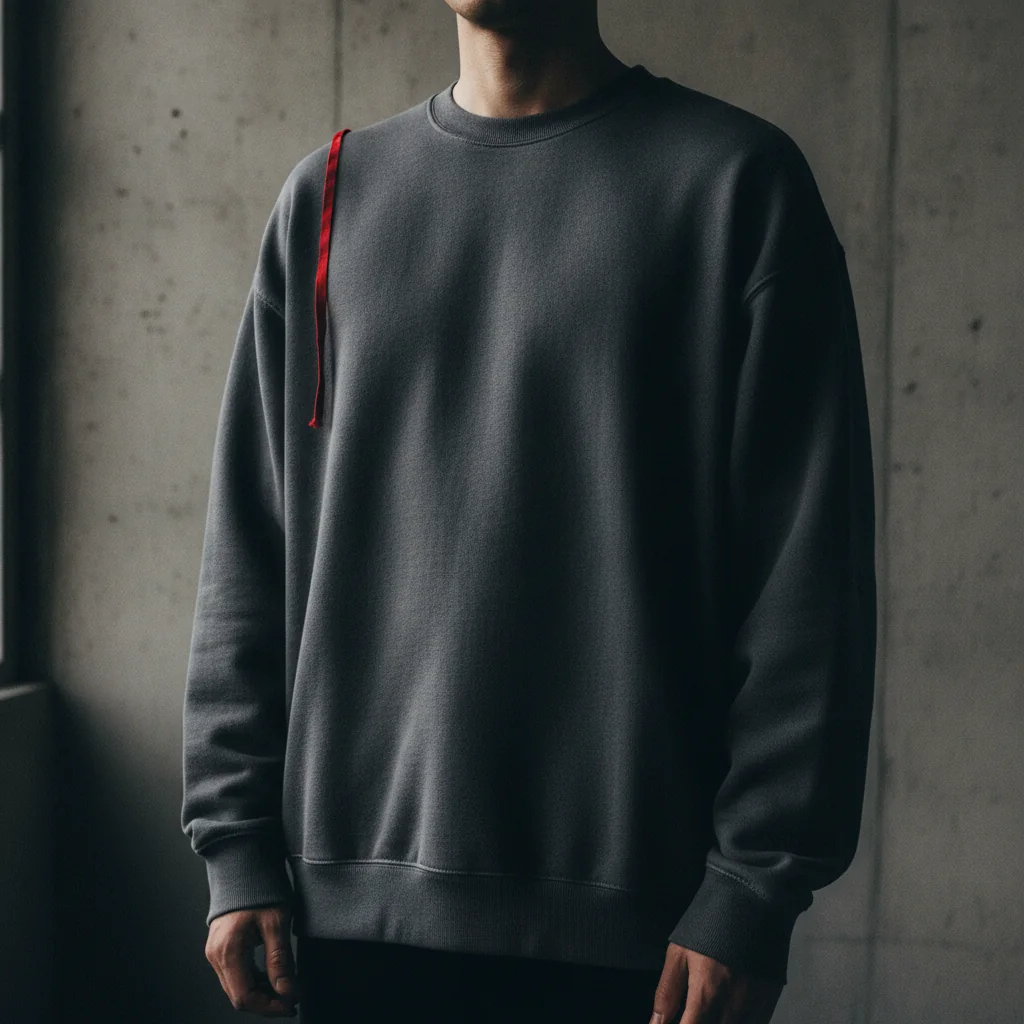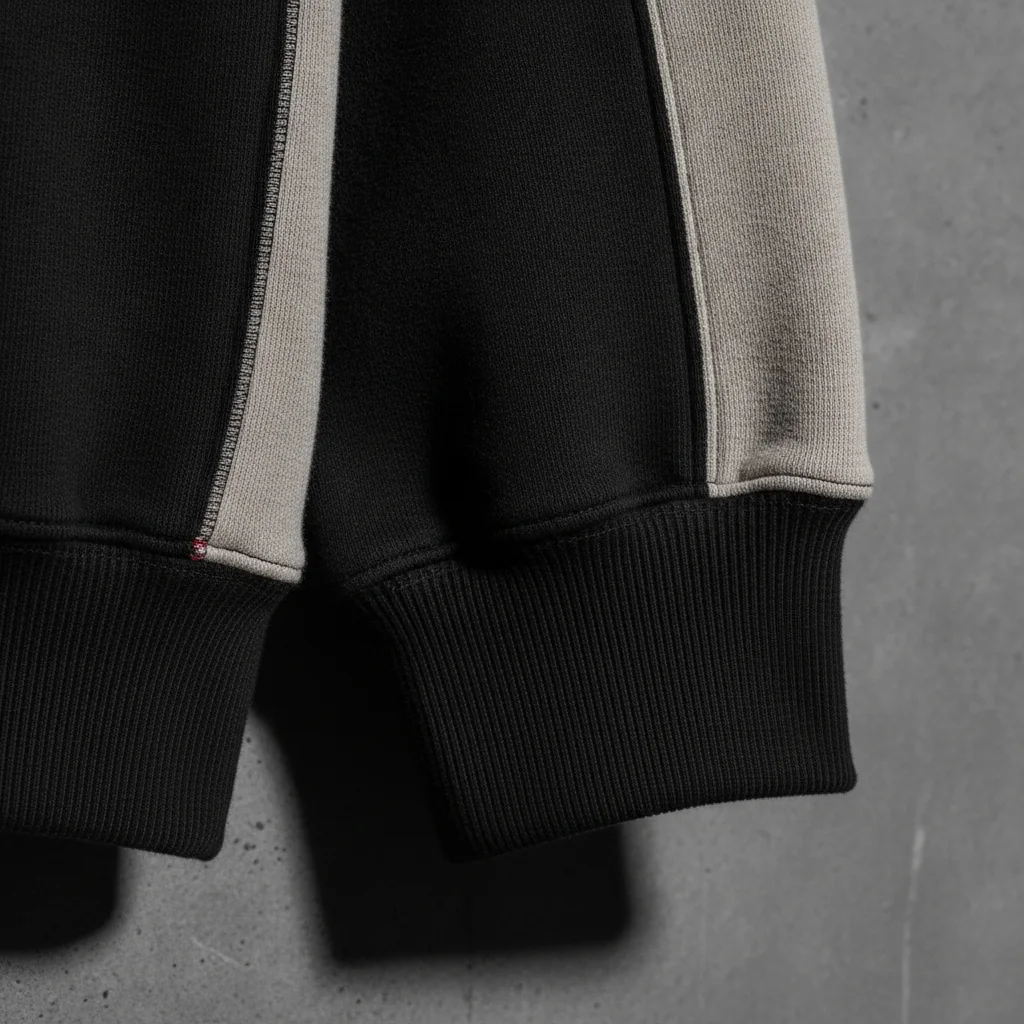
Making custom sweatshirts for a brand runs through five stages: design and tech pack, fabric and decoration selection, sampling, bulk production, and DDP shipping. A brand does not need to own a factory or sew a single stitch – the work is choosing the right specification and manufacturing partner, then approving a sample before bulk cutting begins. This page walks through each stage in order, from a design file on a laptop to finished sweatshirts landed on a warehouse dock.
Step 1: Build a Tech Pack
A tech pack is the manufacturing blueprint for a design – measurements by size, fabric spec (GSM, fiber content), color codes, decoration placement, and construction notes (stitch type, label position). It does not need to be built by a professional pattern maker for a first order; a clear flat sketch with measurements, a fabric choice, and artwork files in vector or high-resolution format is enough for a manufacturer to quote and sample from. Manufacturers with in-house design support can also help translate a rough sketch into a workable tech pack, which shortens the back-and-forth in the sampling stage that follows.
What a Tech Pack Should Include
At minimum: a size chart with body and garment measurements, the fabric weight and composition (for example, 340 GSM cotton fleece), the decoration method and exact placement (front chest, full back, sleeve), pantone or hex color references, and label and packaging instructions. Missing any of these usually adds a round of clarifying questions before sampling can start.
Step 2: Choose Fabric Weight and Construction
Custom sweatshirts are typically manufactured in 240 to 400+ GSM cotton, French terry, or fleece. Lighter weights (240-280 GSM) suit warm-climate markets and layering pieces; heavier weights (340-400+ GSM) suit flagship drops and cold-climate markets where the garment needs to carry weight and structure on its own. French terry gives a slightly more structured hand-feel with a looped interior face, while brushed fleece gives a softer, warmer finish. Construction details worth specifying in the tech pack include ribbed cuffs and waistband, double-needle hems, and whether the fit should be regular, boxy, or oversized.
Step 3: Choose a Decoration Method
Screen printing suits bold, limited-color graphics and becomes more cost-efficient at larger order sizes because the setup cost spreads across more units. DTG (direct-to-garment) suits detailed, full-color, photographic-style art and works well for smaller runs or multiple unique designs. Embroidery – flat or puff – adds a tactile, premium finish suited to logos and smaller graphics. Wash treatments (acid wash, garment dye, tie-dye) add character and are typically applied after construction. Many brands combine two methods on a single sweatshirt, such as an embroidered chest logo with a screen-printed back graphic.
Step 4: Sample Before Bulk
A pre-production sample confirms fit, fabric hand-feel, color match, and decoration placement on an actual finished garment before bulk cutting begins. This step exists specifically to catch problems while a correction is inexpensive – a fit issue found on one sample costs a review and a re-cut pattern; the same fit issue found after 300 units are cut costs the entire run, since problems caught while they are inexpensive to correct almost never repeat once bulk fabric is committed. Sampling generally takes 7 to 12 days, longer if custom color matching or complex decoration is involved. A brand should review the sample in hand, not from a photo, before approving bulk production.
Step 5: Confirm the Order and MOQ
Once the sample is approved, the brand confirms order quantity, size breakdown, and colorway split. MOQ starts from 50 pieces per design, and per-unit cost drops as order size increases because fixed costs (screen setup, sample amortization) spread across more units. A new brand testing a first drop often starts near the MOQ floor and scales up in a reorder once the design sells through.
Step 6: Bulk Production
Bulk cutting and sewing typically takes 10 to 18 days, with decoration running partly in parallel. Quality control checks measurements against the approved sample and sorts for defects before packing. Private label finishing – woven neck labels, hangtags, and branded packaging – is applied during this stage, so it should be fully specified in the tech pack before production starts rather than added afterward.
Step 7: DDP Shipping
Finished sweatshirts ship worldwide on DDP (Delivered Duty Paid) terms, meaning duties and customs clearance are handled before the shipment leaves the factory, so the landed cost quoted at order time is the final cost paid. Air freight to the US, UK, and most EU destinations runs 5 to 9 days. A brand receives a tracked shipment with all customs paperwork already cleared rather than managing a broker or an unexpected duty bill on arrival.
Private Label Details Worth Planning Early
Full private label manufacturing covers custom woven neck labels (not printed), branded hangtags with brand story copy, matching care labels, and branded poly bags or boxes. Planning these details at the tech pack stage – rather than as an afterthought once blanks arrive – keeps the finished product consistent with the fabric and construction quality already built into the garment. A woven label and branded packaging are often what separates a factory-direct product from an unbranded blank in a customer’s hands.
Preparing Artwork Files
Artwork for screen print and embroidery should be delivered as vector files (AI, EPS, or SVG) with each color separated, since screen printing burns one screen per color and embroidery digitizing reads shapes as stitch paths rather than pixels. DTG and all-over print designs can work from high-resolution raster files (PNG or TIFF at 300 DPI or higher) since the printer reads color values directly rather than tracing edges. Low-resolution logos pulled from a website or a social media post are the most common reason a first sample gets delayed – the manufacturer has to request a cleaner file before decoration can be tested.
Working With an Overseas Manufacturer Remotely
Most of the tech pack review, sampling feedback, and production approval happens over email, messaging apps, and video calls rather than in person, which is standard practice for overseas manufacturing relationships. Photos and short videos of the sample from multiple angles – flat lay, on a hanger, and on a body if possible – let a brand confirm fit and fabric hand without visiting the factory. Clear written notes at each review stage (“take the sleeve length up half an inch,” “shift the print two centimeters higher”) keep revisions fast and specific rather than vague.
Reordering an Approved Design
Once a design is approved and produced once, a reorder skips the sampling stage entirely as long as the specification has not changed – same fabric, same GSM, same decoration, same label. This is where custom manufacturing becomes efficient at scale: a brand can reorder a proven seller in a new colorway or add a size run without repeating the full seven-step process above. Keeping a copy of the original tech pack and approved sample on file makes reorders faster to quote and confirm.
Choosing a Fit and Silhouette
Fit is decided at the tech pack stage and is one of the harder details to change after a sample is cut, since it involves the pattern rather than the fabric or decoration. Regular fit follows a standard size chart proportion; boxy fit widens the body and shortens the length slightly for a squared-off silhouette; oversized fit adds width and length across the board, with the shoulder seam sitting lower on the arm. Drop-shoulder construction, where the shoulder seam extends past the natural shoulder point, is common on both boxy and oversized sweatshirts and should be called out explicitly in the tech pack rather than left to the pattern maker to interpret the word oversized on its own.
Planning a Size Range
Most streetwear sweatshirt drops run a size range of S through 2XL, though unisex and oversized-only lines sometimes run a narrower range built around one core fit. A complete size chart supplied with the tech pack, not only a single sample size, lets the manufacturer grade the pattern once and cut each size correctly in the same production run, rather than treating the size range as an afterthought once the sample is approved.
Common Mistakes to Avoid
- Skipping the sample to save a week – fit and fabric problems discovered after bulk cutting cost far more than a sample round.
- Choosing GSM by price rather than product category, producing a hoodie that never feels substantial.
- Leaving decoration placement vague in the tech pack, which invites a misplaced print or logo on the first sample.
- Deciding on private label details after blanks have already been produced, which can mean a second production pass.
- Underestimating total timeline – a first order typically runs 30 to 49 days door-to-door once sampling, bulk production, and shipping are all counted.
How Minku Apparel Handles Each Step
Minku Apparel manufactures custom sweatshirts from its Pakistan factory across the full 240-400+ GSM range in cotton, French terry, and fleece, with in-house screen print, DTG, puff and flat embroidery, acid wash, garment dye, and tie-dye under one roof. Each order includes a tech pack review and a pre-production sample before bulk cutting, full private label finishing, and DDP shipping to the US, UK, and EU, with MOQ starting from 50 pieces per design.
For the complete manufacturing overview, see the custom sweatshirt manufacturer page. For the timeline behind these steps, read how long custom sweatshirts take to manufacture, and for the minimum order size referenced above, see the MOQ guide for custom sweatshirts. Have a design ready? Get a custom quote and send your tech pack to start sampling.
How to Make Custom Sweatshirts for Your Brand — In Detail