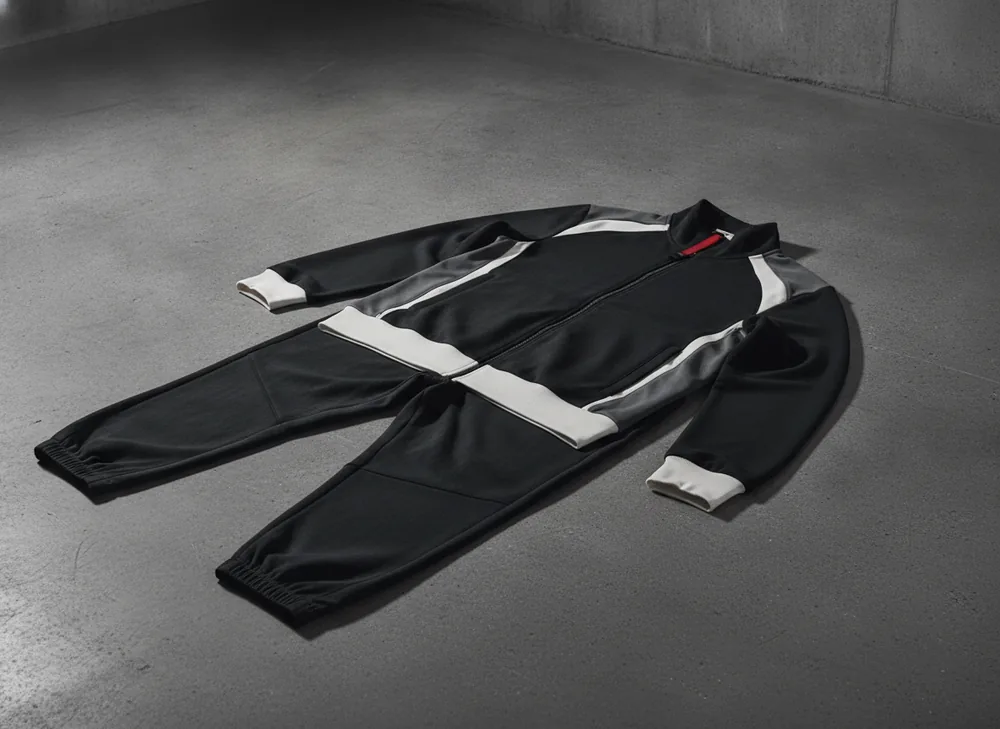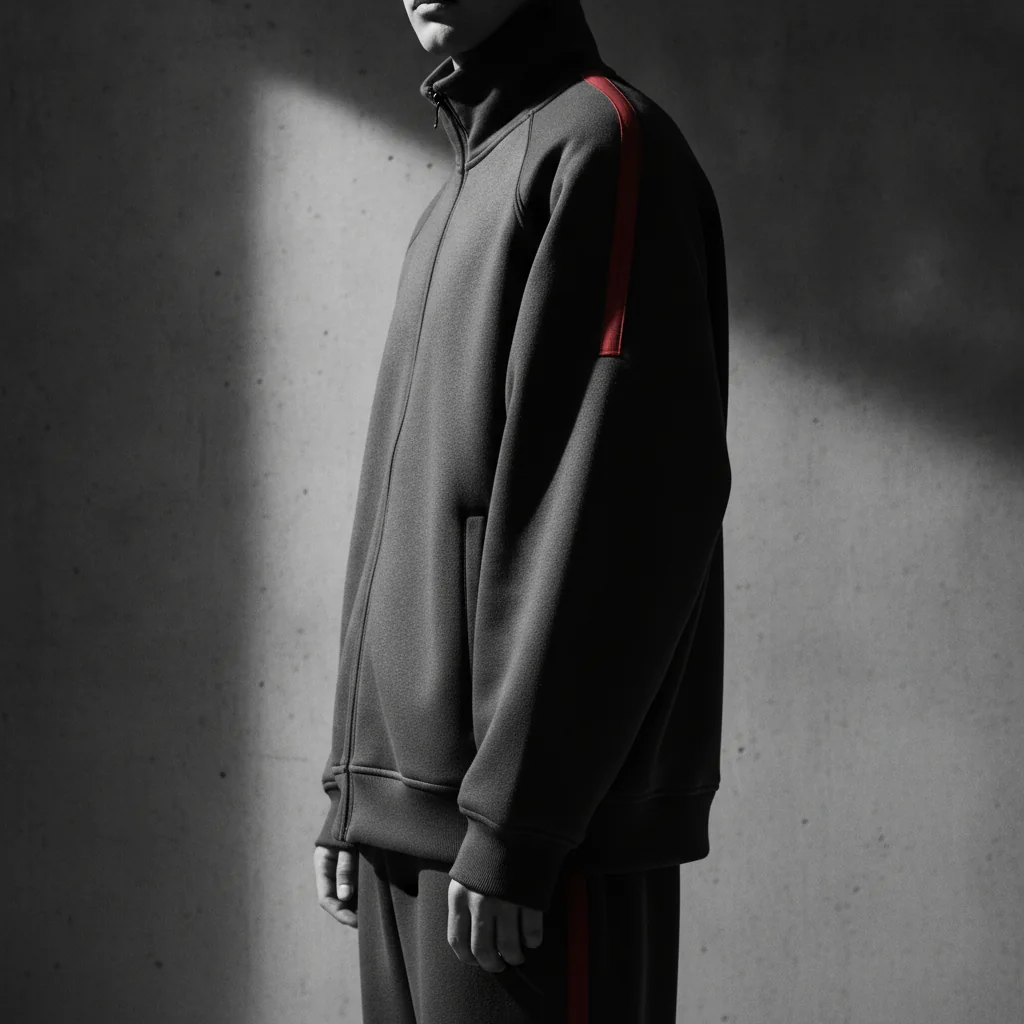
A custom tracksuit set (jacket and matching pant) typically costs between roughly $14 and $32 per unit to manufacture, landed and shipped DDP to the USA, UK, or Europe, depending on fabric weight, decoration method, and order quantity. Fleece or French terry sets with a single-color print sit at the lower end of that range; heavyweight, multi-decoration, or custom-dyed sets with all-over print sit toward the top.
What Actually Drives the Cost of a Custom Tracksuit
Tracksuit cost breaks into five controllable variables: fabric type and weight (GSM), decoration method and coverage, construction complexity (zippers, cuffs, waistband hardware), private label and packaging, and order quantity. Each of these can be tuned to hit a target price point without moving to a lower fabric or construction standard across the board – a brand can, for example, keep 320 GSM fleece but simplify decoration to a single chest print to control cost.
Because a tracksuit is two garments (jacket plus pant), its per-set cost is naturally higher than a single-piece hoodie or tee of the same fabric weight – budgeting for a tracksuit means pricing two constructed pieces, not one.
Fabric Cost: GSM and Fiber Type
Fleece and French terry in the 240-280 GSM range sit at the lower end of the tracksuit fabric cost curve, suited to a lighter, three-season set. Heavyweight fleece at 320-400+ GSM costs more per yard due to the density of yarn used, and adds a small amount to cutting and sewing time since thicker fabric moves through machines at a slower rate.
Nylon and polyester tracksuits for a technical or retro athletic look price differently from cotton-based fleece: base fabric cost can run lower per yard, but bonded seams, taping, or additional lining sometimes used in these constructions can offset that saving. Garment-dyed or acid-wash tracksuits add a dedicated wash and dye stage after construction, which increases cost compared with a piece-dyed or blank fabric order of the same weight.
Decoration Cost by Method
Screen printing prices by number of colors and print locations – a single-color chest logo on the jacket costs less per unit than a three-color design covering the jacket back and pant leg. Embroidery prices by stitch count: a small embroidered logo on the chest or hip costs less than a large, dense puff-embroidered design across the back. DTG suits detailed, photographic, or multi-color designs on cotton-blend fleece and prices per print regardless of color count, which can make it a reasonable choice for a colorful, complex chest design compared with multi-color screen printing.
All-over print, where the design covers the entire fabric panel before cutting, carries the highest decoration cost of the common methods, since it requires sublimation or digital printing on full fabric rolls before the tracksuit is even cut and sewn.
Construction Complexity and Hardware
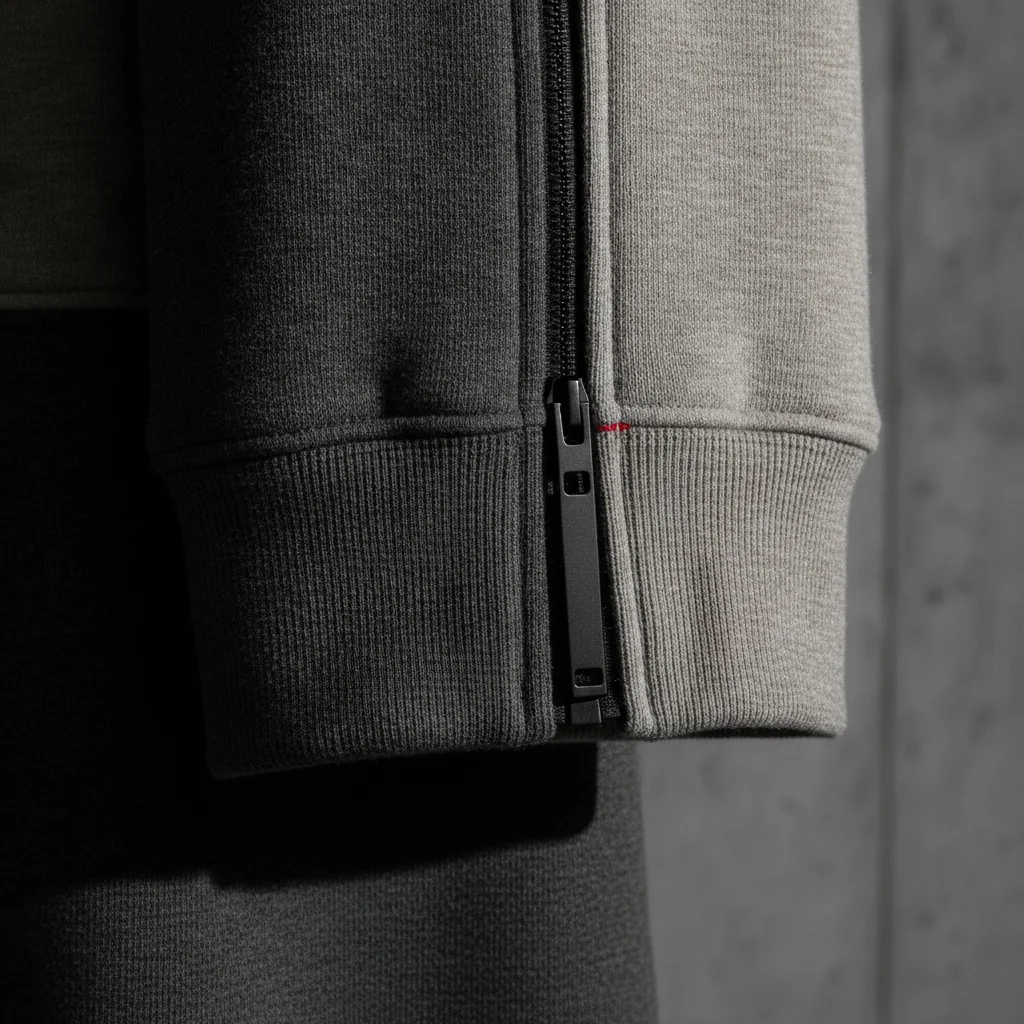
A basic pullover-style jacket with an elastic hem and ribbed cuffs costs less to construct than a full-zip jacket with a hood, drawcord, and zippered pockets – each added component (zipper, drawcord, pocket bag, hood lining) adds its own material and stitch-time cost. Matching pants follow a similar pattern: a simple elastic-waist jogger with ribbed ankle cuffs costs less than a pant with a zippered ankle, side stripe piping, or a drawcord waistband sized with metal eyelets.
Brands should treat hardware choices (zipper pulls, eyelets, drawcords, snap buttons) as a cost lever alongside fabric and decoration – a custom branded zipper pull, for instance, adds a small per-unit cost but reinforces private label identity in a way a stock zipper does not.
Private Label and Packaging Cost
Custom neck labels, woven brand tags at the waistband or hip, hangtags, and branded packaging add a modest per-unit cost that compounds across an order but remains a small share of total unit cost compared with fabric and decoration. Printed poly bags or branded tissue paper add further to packaging cost but reinforce brand identity at the unboxing stage, which matters for a direct-to-customer streetwear drop.
How Order Quantity Changes the Per-Unit Price
Cutting, sampling, and machine setup costs are largely fixed regardless of order size, so they spread thinner across more units as order quantity grows. A 50-piece first order carries a higher per-unit cost than a 300-piece reorder of the identical design, even though total fabric and decoration cost scales with quantity in both cases. This is why a reorder of an already-approved tracksuit design typically prices lower per unit than the first sampled order of the same design and quantity.
Estimated Cost Ranges by Tracksuit Type
| Tracksuit Type | Fabric | Decoration | Estimated Unit Cost (DDP) |
|---|---|---|---|
| Basic fleece set, 1-color print | 240-280 GSM fleece | 1-color screen print | $14-$18 |
| Heavyweight fleece set | 320-360 GSM fleece | 2-color print + embroidered logo | $19-$24 |
| Nylon/technical set | Nylon shell | Embroidery + woven label | $18-$23 |
| Garment-dyed or all-over print set | 320+ GSM fleece | All-over print or garment dye | $26-$32 |
These figures are directional estimates covering fabric, construction, decoration, private label finishing, and worldwide DDP shipping to the USA, UK, or Europe – the exact number for a given design depends on the finalized tech pack and order quantity, confirmed through a quote.
Hidden Costs Brands Often Miss
Sampling cost is a one-time expense before bulk pricing applies, and brands sometimes forget to budget for a second sample round if the first one needs revision. Shipping cost is often quoted separately from unit price by manufacturers that do not offer DDP terms, leaving a brand to handle customs clearance and duty payment on arrival – Minku Apparel builds worldwide DDP into its pricing so the landed cost quoted is the final cost, with no customs surprise at the border. Currency and payment processing fees on international wire transfers can also add a small percentage that is worth confirming with a manufacturer before placing a deposit.
A Worked Example: Pricing a 200-Piece Tracksuit Order
Take a brand ordering 200 fleece tracksuit sets at 320 GSM, with a two-color screen print on the jacket back and a small embroidered logo on the pant hip, standard woven neck labels, and a printed poly bag per set. Fabric and base construction for a set at this weight typically prices in the $11-$14 range per unit. The two-color print adds roughly $2-$3 per unit, and the embroidered hip logo adds another $1.50-$2.50 depending on stitch count. Private label finishing (woven neck label, hip tag, poly bag) adds approximately $1-$1.50 per unit.
Adding these together lands the set in the $16-$21 per-unit range before worldwide DDP shipping, which for a 200-piece air shipment to the USA typically adds $1.50-$3 per unit depending on total shipment weight and destination. A brand can use this same category-by-category build-up – fabric, print, embroidery, labeling, shipping – to estimate cost on its own design before requesting a formal quote.
Comparing Tracksuit Cost to Buying Pieces Separately
A brand could, in principle, order jackets from one supplier and matching pants from another to try to control cost on each piece independently. In practice this rarely lowers total cost, because it doubles sampling fees, doubles shipping paperwork and freight minimums, and introduces a real risk that the jacket and pant fabric dye lots do not match once both pieces arrive. Manufacturing the set as one order under one tech pack keeps fabric sourcing, dyeing, and quality control unified, which is why most streetwear brands price and order tracksuits as a matched set rather than as two independent garments.
DDP vs FOB/EXW Pricing: Why Shipping Terms Change the Real Cost
Some overseas manufacturers quote FOB (Free On Board) or EXW (Ex Works) pricing, which covers only the garment cost up to the factory door or the origin port – freight, customs brokerage, and import duty are the brand’s responsibility to arrange separately once the goods reach the destination country. That structure can look less expensive on the initial quote line, but a brand then needs its own freight forwarder, customs broker, and duty payment plan, and unexpected customs holds or duty assessments can add cost and delay after the goods have already left the factory.
DDP (Delivered Duty Paid) pricing, which Minku Apparel quotes as standard, folds freight, customs clearance, and import duty into the unit price upfront, so the number on the quote is the number that lands at the brand’s door in the USA, UK, or EU. For a brand without an existing customs broker relationship, DDP removes a layer of logistics work and a source of unpredictable added cost at the border.
How to Get an Accurate Cost for Your Tracksuit
An accurate tracksuit cost requires a tech pack: fabric type and GSM, jacket and pant construction details, decoration method and placement, label and packaging specification, and order quantity. Minku Apparel quotes against that specification directly rather than a generic per-unit range, and builds worldwide DDP shipping into the landed price so a brand budgeting a launch knows the true delivered cost before committing to a deposit.
Brands mapping out a launch budget can also check how long tracksuit manufacturing takes, review how to price a tracksuit for retail once unit cost is known, or see the full custom tracksuit manufacturer overview. A tech pack ready for quoting can go straight to get a custom quote.
How Much Does It Cost to Manufacture Custom Tracksuits? (2026) — In Detail